
How to Curate a Cohesive Set of Items for a Personalized Gift Box
Curate a cohesive personalized gift box by choosing one focal item that is strongly relevant to the recipient and chosen theme, then add only supporting items that complement that focal item or contribute a distinct role. Keep variety when it supports the same purpose or experience; remove filler, unexplained duplication, and items that introduce a competing direction, and stop when another item would add no distinct recipient-relevant contribution.
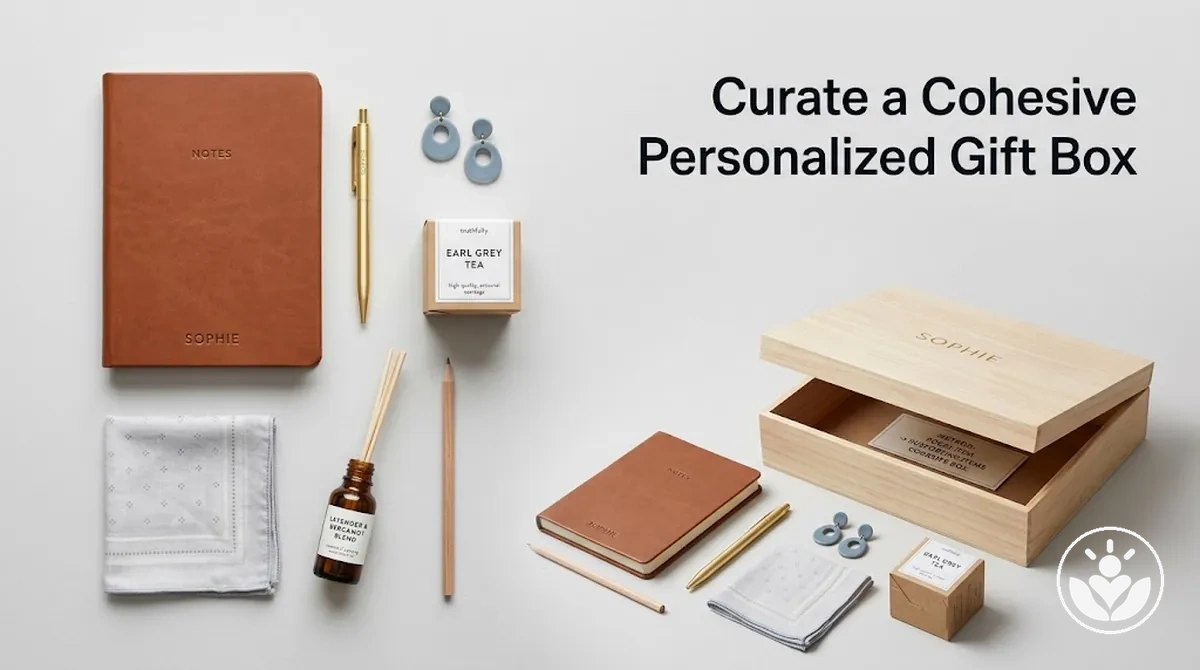
Decision path
Should this item stay in the gift box?
Start after the recipient, occasion, and theme are clear. Apply these checks in order; a clear conflict with the recipient or occasion outweighs an item's general appeal.
- Recipient and occasion fitKeep considering the item when it suits the recipient's relevant interests, preferences, or needs and fits the occasion.
- Theme and common threadThe item should reinforce the chosen theme or gift purpose; a weaker theme link needs another clear recipient-relevant reason to belong.
- Focal-item relationshipPrefer additions that support, extend, or meaningfully contrast with the focal item's experience rather than start an unrelated direction.
- Distinct contributionEach supporting item should add a recognisable function, meaning, practical element, sensory element, or personal connection instead of unexplained duplication.
- Variety and stopping pointDifferent item types can stay cohesive while the common thread remains clear. Stop adding when the next item would not make a distinct contribution.
Keep the item when its contextual fit is sound and its reason to belong can be stated clearly. Reconsider it when it is filler, unexplained duplication, or creates a competing direction.
The specific choices depend on the recipient's interests and preferences, the occasion, and the common thread the gift box is meant to express. Cohesion comes from meaningful relationships between items, not from collecting individually appealing products or making every item look alike.
This guide focuses on deciding which items belong together; box construction, fillers, physical arrangement, and final presentation are separate stages.
Table of Contents
Turn the Chosen Theme and Recipient Needs Into Item-Selection Criteria
A candidate item should qualify for the personalized gift box only when it fits the recipient and aligns with the chosen theme, with suitability changing when the occasion or purpose changes.
This method assumes the theme is already settled; if it is not, first choose a coherent theme before evaluating individual items.
Use the following selection criteria to translate recipient preferences and the theme into repeatable accept-or-reject decisions.
Each criterion tests a specific condition and its implication for whether a candidate item belongs in the cohesive set.

- Recipient relevance: An item qualifies when it reflects the recipient's interests, preferences, or needs; it does not qualify on this criterion when its main appeal has little relevance to that recipient.
- Occasion fit: An item qualifies when its purpose and tone suit the occasion; it conflicts with this criterion when it is inappropriate for the context or intended purpose of the gift.
- Theme connection: An item qualifies when it supports the chosen theme or common thread; it conflicts with this criterion when its connection to that theme is unclear.
- Usefulness or enjoyment: An item qualifies on this preference criterion when it offers practicality or enjoyment that aligns with the recipient preferences; its value is weaker when neither is relevant to that recipient.
- Quality consistency: An item supports cohesion when its apparent quality is consistent with the rest of the curated set; a noticeable mismatch can make it less compatible with the set.
- Compatibility: An item qualifies when it complements the other selected items and contributes a relevant role; it conflicts with this criterion when it unnecessarily duplicates another item's role or weakens the set's common thread.
The same candidate item can therefore qualify for one recipient or occasion and fail the selection criteria for another.
For example, a strongly scented item may align with the preferences of a recipient who enjoys that scent but conflict with the stated preferences of someone who avoids fragranced products.
Judge suitability by recipient relevance, occasion fit, theme connection, and compatibility rather than assuming an item category is inherently suitable.
Define the Qualities Every Item Should Share
Shared item qualities are the attributes that connect otherwise different items into one curated set.
Cohesion can come from meaningful relationships such as shared purpose, theme relevance, and recipient fit rather than requiring every item to look alike.
- Shared purpose: Each item shares a common thread when it supports the intended purpose or experience of the gift, even if individual items serve different functions.
- Theme relevance: Each item reinforces cohesion when it aligns with the chosen theme in a recognisable way without requiring the same colour, appearance, or product category.
- Recipient fit: Each item contributes to cohesion when it connects with the recipient's relevant interests, preferences, or needs, making the set feel intentionally directed toward that person.
- Compatible tone: Each item's tone should complement the intended mood or character of the set, while allowing differences that do not conflict with the recipient or theme.
- Complementary use: Items can serve different functions when their uses complement one another or contribute to the same recipient experience, helping separate objects feel intentionally related.
- Quality: The appropriate quality level depends on the recipient, theme, and item types, but consistency across the set can reinforce the sense that the items belong together.
The image demonstrates how varied item categories can share purpose and recipient relevance while differing in appearance, making non-visual cohesion easier to recognise.
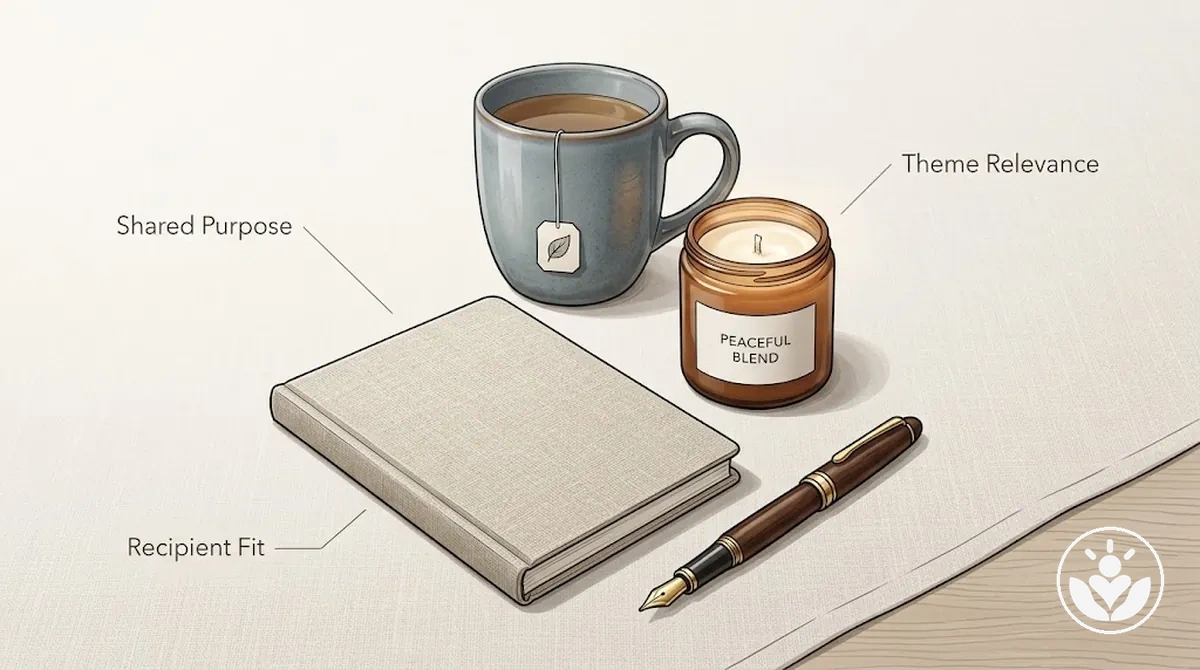
Visual similarity can support cohesion, but it is optional when shared purpose, recipient fit, or a common experience provides the stronger connection.
Matching colours or choosing items from one category can create a superficial resemblance, whereas substantive cohesion comes from attributes that make different items meaningfully compatible as a curated set.
Filter Out Items That Do Not Fit the Recipient, Occasion, or Purpose
A candidate item should be removed when its contextual fit is weak, even if the item is appealing on its own.
A clear conflict with recipient fit, the occasion, or the gift's purpose is a stronger rejection criterion than the item's general appeal.
Screen each candidate item for conditions that would weaken its contribution to the emerging set.
These rejection checks identify reasons an otherwise appealing item may need to be excluded or reconsidered.
- Weak recipient fit: Exclude a candidate item when it conflicts with known recipient preferences or lacks a meaningful connection to the recipient.
- Occasion or purpose conflict: Remove an item when its function or tone conflicts with the occasion or does not support the intended purpose of the gift.
- Duplicate role: Exclude an item that duplicates an already-covered role when the redundancy adds no distinct usefulness, experience, or personal significance.
- Theme mismatch: Reconsider an item when its connection to the theme is weak, because personal significance or usefulness may justify a borderline thematic fit.
- Impractical fit: Remove an impractical item when a known recipient preference, need, or circumstance makes it unsuitable for its intended use.
- Unrelated item: Exclude an unrelated item when it lacks a clear relationship to the recipient, purpose, theme, or other selected items and therefore does not support the curated set.
A borderline candidate is easier to judge when its relationship to the surrounding set is visible, such as whether personal significance offsets a weak theme connection.
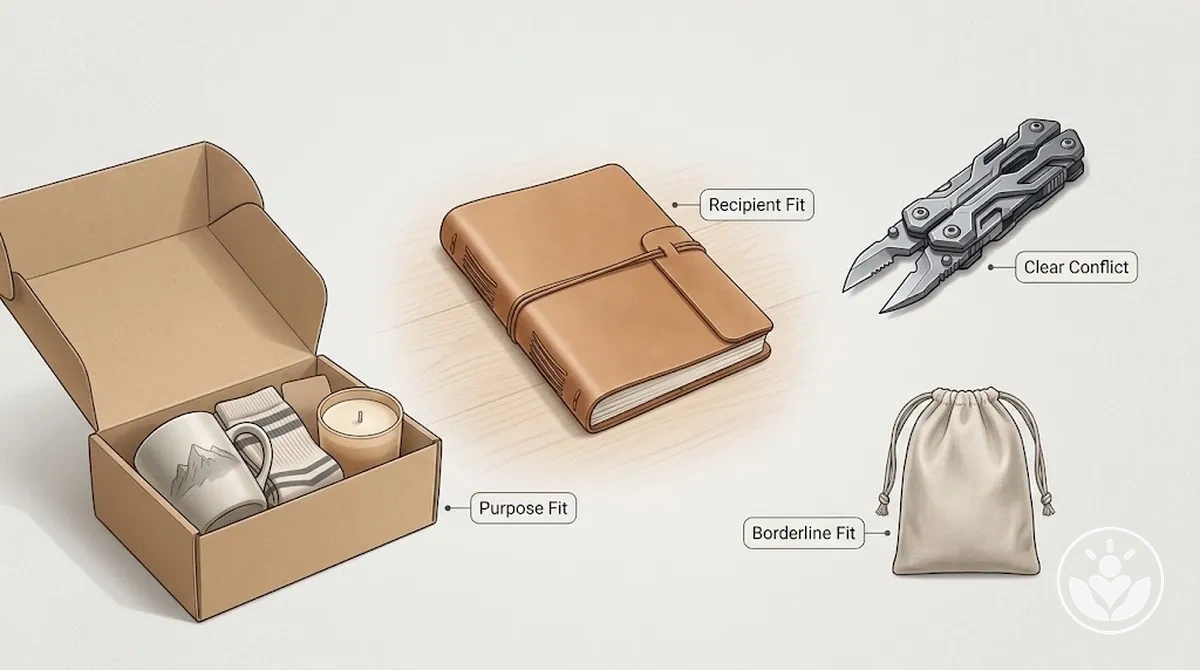
For example, a practical item that only loosely matches the theme may remain suitable when it directly supports the recipient's needs, whereas a visually coordinated item may be excluded when it has no useful or personal connection.
This subsection judges fit among candidate items rather than generating gift categories; deciding how to choose what to include is a different task.
Choose One Focal Item to Anchor the Gift Box
The focal item is the item that gives the rest of the gift-box selection its clearest thematic or experiential direction.
It acts as an anchor by representing something especially relevant to the recipient, theme, intended message, or experience, rather than earning focal status simply through physical size or price.
Choose a focal item for the meaning it contributes and for its ability to guide complementary additions.
These focal-specific criteria help determine whether a candidate can serve as the reference point for supporting items rather than merely qualifying for inclusion in the set.
- Recipient relevance: A strong focal item represents an interest, preference, need, or connection that is especially meaningful to the recipient.
- Theme or intended message: The item should express the theme or intended message clearly enough to give subsequent choices a consistent direction.
- Usefulness or emotional significance: The item can anchor the intended experience through practical usefulness, emotional significance, or a combination that matters in the recipient's context.
- Complement potential: The item should support complementary additions with distinct roles, allowing supporting items to reinforce rather than compete with its core meaning.
The image demonstrates semantic anchoring rather than physical placement: one focal item provides the reference point for complementary choices connected by the same theme or recipient experience.
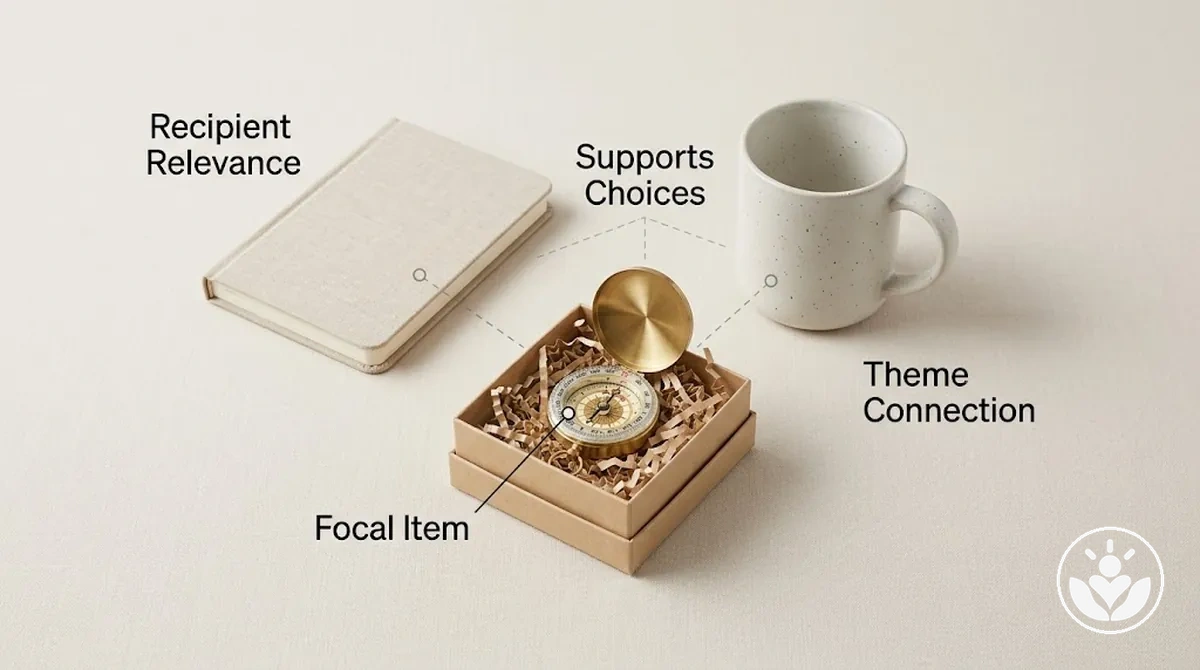
For example, a tea-related item could act as the focal item when the set's purpose is to create a tea-centred experience, yet serve only as a supporting item when another recipient-relevant experience provides the main direction.
Focal status therefore depends on the set's purpose and intended experience, not on which object is larger or more expensive; the focal item's function is to guide the complementary supporting choices that follow.
Build the Supporting Item Set Around the Focal Item
Add supporting items one relationship at a time around the focal item's purpose so each addition strengthens the shared experience or theme.
This sequence keeps the supporting item set focused by requiring every new item to make a distinct contribution before the next one is considered.
The image illustrates the same build logic: the focal item sets the direction, and each successive supporting item is checked for fit and contribution rather than added simply to increase quantity.
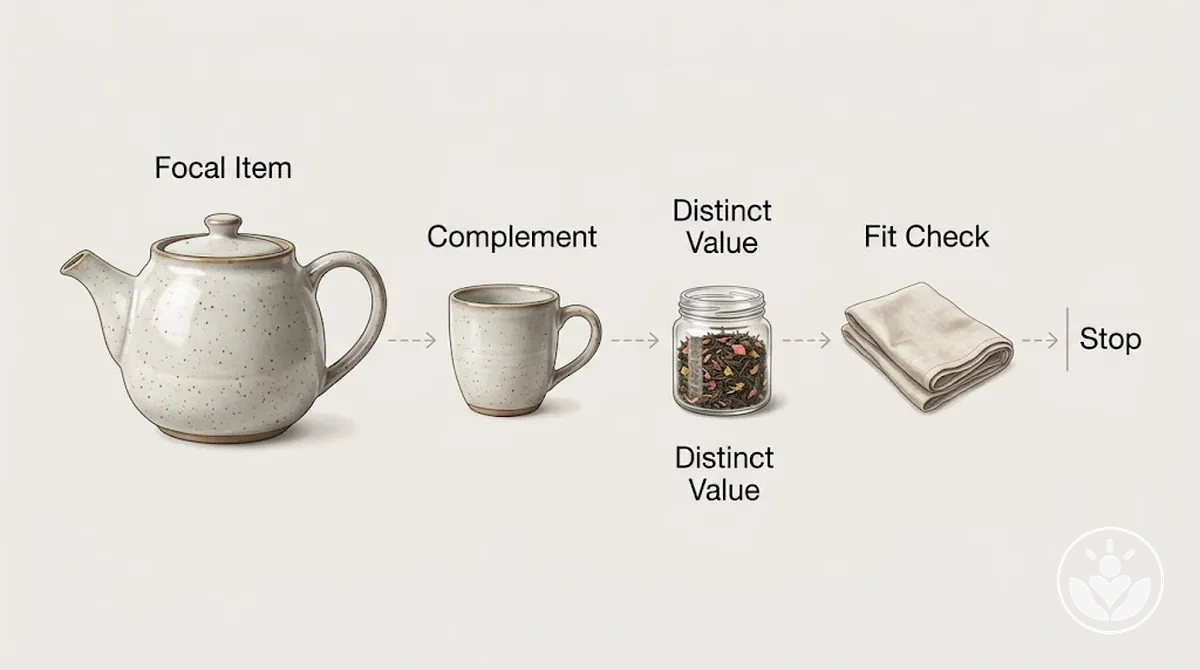
- Identify the focal item's purpose: Define the experience, meaning, or function the focal item anchors so the set has a clear direction. Check that this purpose still aligns with the recipient and the intended theme before selecting supporting items.
- Choose one complementary need or experience: Select a supporting item that complements the focal item by extending a related need or shared experience. Check that it contributes a distinct role rather than duplicating something already covered.
- Check the addition against the selection criteria: Test the supporting item for recipient fit, theme fit, and a clear relationship to the focal item. Include it only when it adds useful meaning, usefulness, or purposeful variety without weakening the set's direction.
- Stop when the next item adds no distinct value: Apply the stop condition when another candidate would duplicate an existing role or fail to increase usefulness, meaning, or variety. The right stopping point depends on the set, so this method does not require a fixed item count.
The supporting item set has reached its practical stopping point when another addition no longer makes a distinct contribution to the focal item's purpose or the shared experience.
This stop condition prevents accumulation for its own sake while preserving recipient fit, theme fit, and complementary relationships.
Pair Supporting Items by Shared Use or Experience
Supporting-item pairing connects supporting items through a shared use, routine, moment, or shared experience in which their contributions complement one another.
Meaningful complementarity can cross product categories when each item supports the same recipient experience rather than merely sharing a broad theme label.
The image demonstrates this relationship by showing different supporting items linked through one shared routine and identifying the complementary contribution each makes.
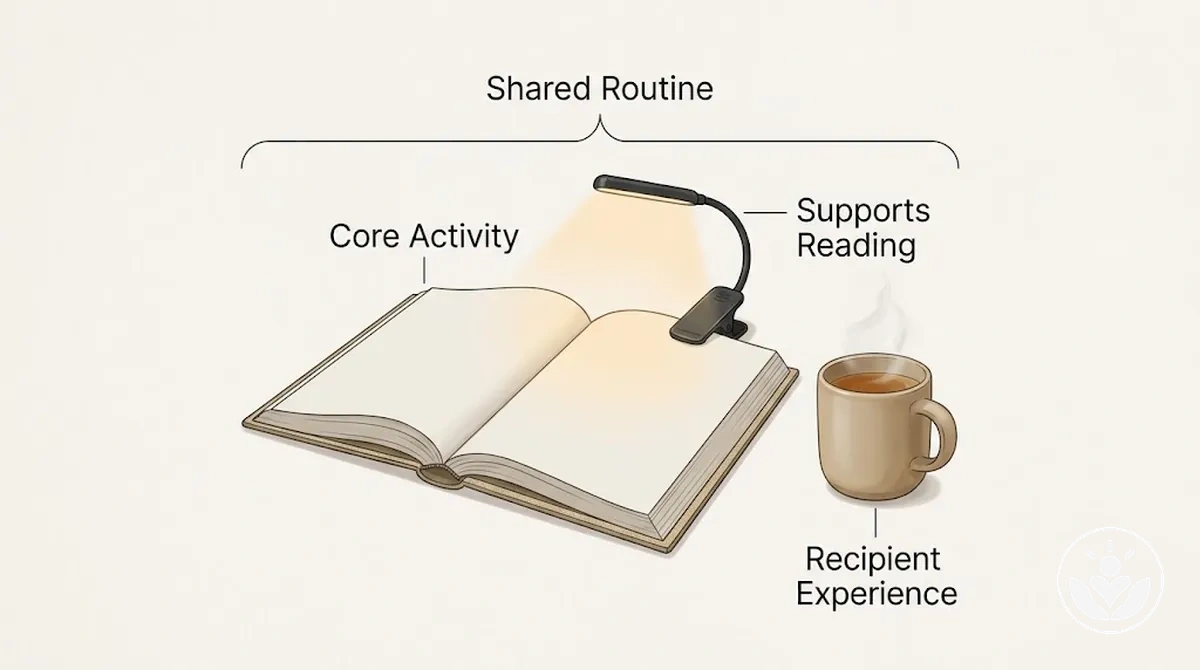
Items that share a theme label but have no plausible shared use, sequence, or experiential connection form a more superficial pairing.
The meaningful relation depends on the recipient's habits and context, so a combination that complements one recipient's routine may not support another recipient experience in the same way.
Give Each Supporting Item a Distinct Role
A supporting item's distinct role is the specific function it contributes to the whole set rather than the product category it belongs to.
Useful roles depend on the recipient, theme, and focal experience, so the list below classifies types of contribution rather than prescribing a universal set of components.
- Enhance the focal experience: A supporting item can extend or reinforce what the focal item enables, making the central experience more useful or meaningful.
- Add a practical or sensory element: A supporting item can contribute a practical element or sensory element that supports the intended experience without simply duplicating the focal item's function.
- Introduce contrast: A supporting item can differentiate part of the experience through a relevant change in function, sensation, or tone, adding variety while remaining connected to the whole.
- Carry the personal message: A supporting item can express a recipient-specific reference, sentiment, or connection, adding personal meaning that the other items may not provide.
For example, two individually relevant items can still create redundancy when both perform the same function without adding a different contribution to the focal experience.
Judge the supporting-item mix by the distinct role each item performs and the added value it contributes, not by the number of product categories represented.
Balance Variety Without Breaking Cohesion
Variety supports a cohesive gift box when differences add interest while recipient fit, the theme, and the relationship to the focal item remain stable.
The common thread should stay recognisable as individual items vary, so contrast broadens the recipient experience without introducing a competing direction.
What can vary without breaking cohesion
- Item type
- Different kinds of items can coexist when they still support the same theme or recipient experience.
- Flavour or scent
- These can add contrast when the choices remain relevant to the recipient.
- Texture
- Texture can broaden the experience when it complements rather than distracts from the focal item.
- Use moment
- A different use moment can extend the theme into another part of the recipient's routine.
- Intensity
- A stronger or subtler option can add contrast when it retains the same common thread.
For example, a set can combine different item types, textures, or use moments when each difference supports the same focal experience and recipient fit; the variety then adds interest without weakening cohesion.
An assortment becomes more fragmented when item type, flavour, scent, purpose, and theme all shift toward unrelated experiences at once.
A practical method is to vary only the dimensions that add useful contrast while checking that the common thread, focal item relationship, and recipient fit remain clear, rather than applying a fixed numerical rule.
Vary Item Types Without Creating Competing Directions
Different item types can coexist when each one supports the same recipient need, complements the focal item, or contributes to the same intended experience.
Use category diversity only while those relationships preserve a visible shared direction rather than creating thematic fragmentation.
- Recipient need: A different item type remains coherent when it addresses the same relevant recipient need or a closely related need, so the category difference contributes to one common purpose.
- Focal item: A different item type fits when it supports or extends the focal item instead of competing with it for a separate thematic direction.
- Intended experience: A different item type reinforces the set when its function contributes to the same intended experience; if it introduces an unrelated experience, the category difference can fragment the shared direction.
For example, cross-category items can reinforce one direction when one supports an activity and another supports the same recipient experience, while equally relevant items can compete when they point toward two unrelated experiences.
Judge item-type diversity by the relationship each category contributes to the whole set, not by category similarity alone.
Avoid Redundant or Unrelated Additions
Redundant or unrelated additions weaken item curation when they add volume without adding a distinct contribution that is relevant to the recipient or theme.
These patterns help diagnose why an otherwise acceptable item may still make the emerging set feel repetitive, padded, or disconnected.
- Redundant function: An item duplicates a role already covered and contributes little new usefulness, meaning, or experience, making the set repetitive; remove or replace it unless the duplication has a distinct recipient-relevant purpose.
- Unrelated filler item: A filler item with weak recipient relevance and no clear connection to the set contributes little beyond increasing the number of items; remove it or reconsider it if personal significance provides a meaningful connection.
- Last-minute theme break: An unrelated addition made late in the process can distract from the established direction when its purpose or theme connection points elsewhere; remove it or choose an addition that reinforces the existing direction.
- Accumulation of weak choices: Several individually plausible items can weaken the set when each makes only a minor or duplicative contribution; remove the weak choice or choices that do not add a distinct contribution rather than preserving them simply to make the set larger.
- Impressive in isolation: Keeping an item only because it is expensive or impressive can create a theme break when it lacks recipient relevance or a meaningful role in the set; remove or reconsider it unless its significance to the recipient justifies the weaker thematic connection.
For example, a set may initially contain two items serving the same supporting function plus one disconnected addition, making the overall selection feel repetitive and unfocused.
Removing the weaker duplicate or unrelated item leaves the remaining contributions easier to distinguish and strengthens the set's existing direction.
Review the Full Selection Before Arrangement
The final review confirms that the selection is ready for arrangement only when each item can be justified by recipient fit, theme, its relationship to the focal item, or a distinct contribution.
Use the checklist to verify focal clarity, supporting-item purpose, occasion fit, the common thread, role distinctiveness, controlled variety, and the absence of filler.
- Focal item: Verify that the focal item still provides a clear reference point for the set; if its role is unclear, reconsider which selected item should guide the remaining relationships.
- Supporting item: Confirm that every supporting item has a clear reason to be present through recipient relevance, theme connection, focal support, or a distinct contribution; revise an item that cannot be justified.
- Recipient and occasion fit: Verify that the full selection still suits the recipient fit and occasion fit established for the gift; reconsider any item that conflicts with either context.
- Common thread and variety: Confirm that differences between items remain connected by the common thread; revise an item when its variation introduces a competing direction.
- Duplicate role: Check whether two items perform the same role without adding meaningfully different value; revise or remove the unnecessary duplicate when its contribution cannot be distinguished.
- Filler: Confirm that no item remains only to increase the amount of content; revise or remove filler that lacks recipient relevance, theme connection, focal relationship, or another distinct contribution.
If any check fails, reconsider the specific item or relationship that failed rather than automatically discarding the whole set.
Once all six checks pass, proceed to arrange the selected items; the physical arrangement itself belongs to the next stage.