Personalized Gift Box Ideas for Different Recipients and Occasions
Choose a personalized gift box idea by matching four things: the recipient relationship, the occasion, known interests or routines, and any practical or personal constraints. Use the relationship and occasion to set the personalization depth and tone, then let reliable preferences choose the theme; adapt or reject any idea that conflicts with known restrictions or boundaries.
Recipient-and-occasion decision guide
Find a suitable gift-box direction
Choose the strongest known signals. The result gives an idea direction, not a fixed formula: recipient preferences and known constraints can override a generic relationship or occasion convention.
Personalized gift box ideas become more specific as the recipient's relationship to the giver, interests, preferences and personality become clearer.
A close relationship can support more personal references or meaningful details, while greater formality usually calls for more restrained personalization.
The occasion also changes suitability by shaping the expected tone, purpose and timing, while practical constraints can narrow which idea direction remains appropriate.
Personalized gift box ideas built around a shared memory, for example, may suit a close partner but feel too intimate for a colleague even when the broad theme is similar.
Recipient relationship is therefore a useful first signal for narrowing the level and style of personalization before considering the occasion in more detail.
Table of Contents⌄
Gift Box Ideas for Different Recipient Relationships
The recipient relationship changes the appropriate personalization depth and tone of a gift box idea.
Greater closeness and shared context can support more intimate personalization, while greater formality usually calls for more restraint and attention to professional or social boundaries.
Closeness indicates how much shared history or personal meaning can reasonably shape the idea, while formality indicates how restrained the tone should be.
Known interests and preferences provide a stronger basis for recipient fit than the relationship label alone.
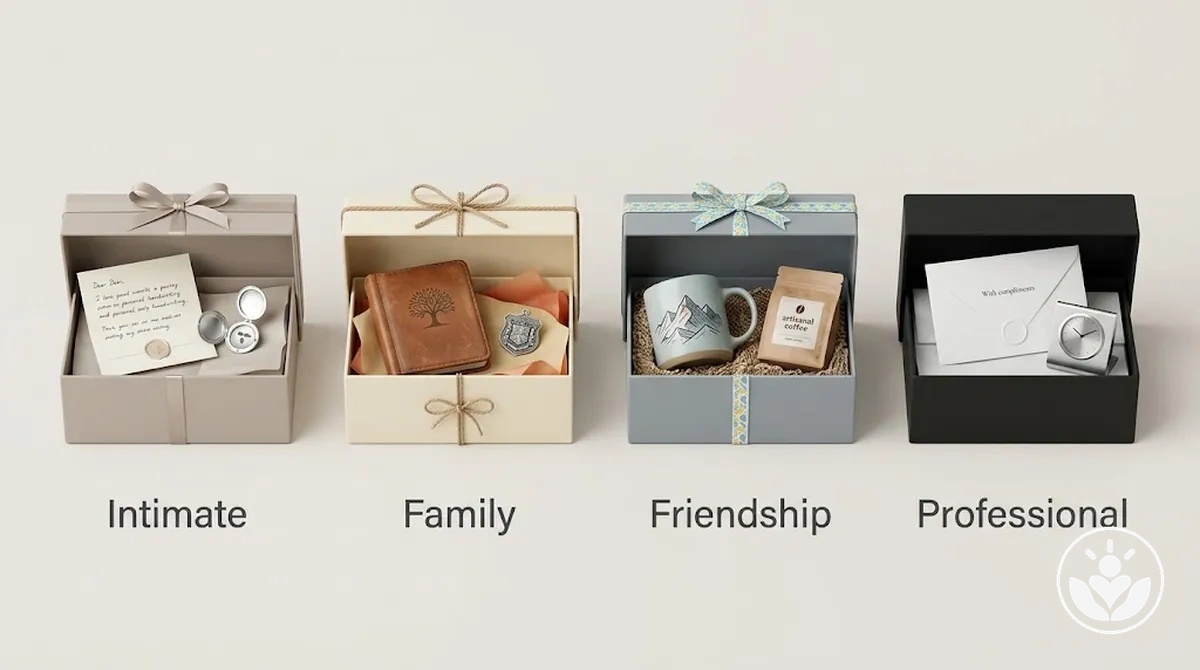
Intimate relationship: Greater closeness and substantial shared context can support a more personal tone and deeper personalization based on shared memories or known preferences.
Family relationship: Shared history can support meaningful personalization, but the degree of intimacy should reflect the actual relationship and the recipient's preferences rather than the family role itself.
Friendship: Known interests, routines or shared context can guide a warm, personal tone, with personalization depth increasing when those preferences are well established.
Professional relationship: Greater formality and professional boundaries favour a restrained tone and lighter personalization based on appropriate shared context or clearly known preferences.
Recipient relationship labels are useful cues for judging closeness and formality, but they do not guarantee a person's interests, preferences or preferred level of personalization.
Ideas for Partners and Couples
Gift box ideas for partners and couples can use more personal cues when shared memories, shared experiences or meaningful routines are part of the relationship.
Shared history can support personalization around a meaningful place, recurring activity or memory that both people recognise.
Intimacy varies between couples, so the appropriate personalization depth depends on the couple's shared context, preferences and comfort with sentimental details.
A highly personal reference can suit one romantic partner while a shared-interest concept may feel more natural for another.
Two useful directions
Memory-led concept
If a meaningful place or shared memory carries personal significance, the gift box theme can reference that shared history through restrained visual details and a personal note. The relationship cue is emotional significance rather than romance alone.
Experience-led concept
If partners regularly share a hobby, routine or date-night interest, the theme can centre on that shared experience. This keeps personalization practical and recognisable without requiring strongly sentimental details.
The useful lesson is to match the degree of intimacy and personalization to known shared context and preferences, rather than assuming every couple values the same romantic cues.
Ideas for Family Members
Gift box ideas for a family member are more personal when the family role reflects real shared history rather than kinship alone.
Memories, familiar routines or traditions can provide specific cues for personalization when they are meaningful to that relationship.
Family context can also include household routines, comfort preferences, interests and generation or age context, but these cues matter only when they reflect the individual.
They can shift the tone from memory-led to comfort-led, hobby-led or tradition-led without assuming that relatives of the same age or family role share the same preferences.
Use the family role as context, not as a stereotype
Parent
A recurring tradition or meaningful memory can guide a tradition-led or memory-led theme when that shared history matters to the parent and the occasion.
Sibling
A shared hobby, long-running interest or familiar routine can provide a stronger personalization cue than the sibling label itself.
Grandparent or younger relative
A familiar tradition, activity or comfort preference can shape the theme when it reflects the individual. Age or generation can inform suitability, but should not substitute for known interests and routines.
Family category alone does not determine suitability; the stronger cue is the shared context and known preferences within the actual relationship.
Ideas for Friends and Close Connections
Gift box ideas for friends and close connections can draw on shared interests, routines and inside references when those cues reflect the actual friendship.
Greater closeness and shared experience can support more personal or playful personalization, while less-established preferences call for more restraint.
A long-standing friendship may provide enough shared history for nostalgic references or familiar routines to shape the tone, while a newer or less intimate connection may offer fewer reliable personal cues.
Neither context is inherently more suitable; the difference is how confidently shared experiences and preferences can guide the personalization.
Match personalization to shared context
Long-standing friendship
A recurring activity, hobby or well-understood inside reference can become the central theme. Established shared context can support deeper personalization without relying on generic friendship clichés.
Newer or less intimate connection
Use a recent shared activity or clearly known interest as the cue and keep the tone restrained. This stays relevant without assuming closeness or shared history that has not developed.
Personalization depth is therefore better matched to known shared interests, experiences and preferences than to the friendship label alone.
Ideas for Colleagues, Teachers, and Mentors
Gift box ideas for colleagues, teachers, and mentors generally suit relevant but restrained personalization because a professional relationship or semi-formal relationship places limits on intimacy.
Appreciation can still feel personal when it reflects appropriate shared context or known preferences without crossing professional boundaries.
Professional distance, formality and workplace or educational norms help determine the acceptable personalization depth and tone.
Where a known interest is appropriate to acknowledge, it can make professional appreciation more specific; where preferences are uncertain or the context is more formal, restrained personalization is more suitable.
Colleague: A recurring workplace interest or appropriate shared experience can guide a lightly personalized concept while keeping the presentation professional and avoiding overly personal references.
Teacher: Appreciation can reflect an appropriately known interest or relevant educational context, provided the personalization remains consistent with applicable educational, cultural or institutional norms.
Mentor: A shared professional interest, field or meaningful learning context can provide a relevant personalization cue while maintaining the formality appropriate to the relationship.
Relevant personalization uses known preferences or shared context to express appreciation; highly personal details can be unsuitable when they exceed the professional boundaries of the relationship.
Gift Box Ideas for Different Occasions
The occasion changes the gift box idea's purpose, message, timing, tone and formality.
A celebration may support a more playful or ceremonial tone, while appreciation or support can call for a more restrained or comforting direction depending on the recipient and relationship context.
Occasion is a useful filter for suitability, but it is not the only decision factor.
The event context indicates what the gift is intended to communicate, while recipient preferences and the relationship determine whether the resulting tone and level of personalization are appropriate.
Celebration: Birthdays and personal milestones centre on recognition or achievement, so the tone can be playful, personal or more ceremonial when that suits the recipient.
Seasonal giving: Seasonal occasions can reflect a shared tradition or seasonal context, but the tone should still follow the recipient's preferences rather than assuming a particular tradition is meaningful to them.
Appreciation: Thank-you and recognition contexts communicate gratitude, so the tone can be warm and specific while remaining appropriately formal where the relationship requires it.
Support: Get-well or other supportive situations communicate care or encouragement, so a gentle, considerate tone is more suitable when it reflects the recipient's current situation and preferences.
The same recipient may therefore suit different idea directions for a birthday, thank-you, holiday or get-well situation, but recipient preferences can override generic occasion conventions.
Ideas for Celebrations and Personal Milestones
Celebration and milestone gift box ideas can change with what the occasion signifies.
A birthday may support a playful or highly personal tone, while a milestone associated with a major change or commitment may suit a more sentimental, practical or ceremonial personalized concept when that direction fits the recipient.
The milestone's significance, the recipient relationship and the desired tone provide the main cues for shaping the concept.
A personally meaningful occasion can support deeper personalization when the relationship and known preferences justify it, while a more formal milestone may call for greater restraint.
Occasion → tone → personalization cue
Birthday
A playful concept can draw on a shared interest, recurring joke or meaningful memory when those references suit the relationship. More detailed birthday gift box planning can handle execution separately.
Wedding
A sentimental or ceremonial tone can reflect the milestone when it suits the couple and the giver's relationship to them. Detailed wedding gift box planning can develop the concept without assuming every wedding needs the same emotional style.
Graduation or new home
An achievement or transition can support a congratulatory or practical direction, with personalization tied to the recipient's circumstances and preferences rather than the milestone label alone.
Ideas for Seasonal and Holiday Occasions
Seasonal and holiday gift box ideas can use the occasion as a timely theme without letting the holiday determine the entire concept.
A seasonal occasion may suggest a festive, comforting or reflective tone, but recipient preferences still determine whether that theme has personal relevance and suitability.
Tradition can guide the idea when a particular family or cultural custom is meaningful to the recipient, while timing and climate can influence which seasonal references feel relevant.
Where those cues are less important to the recipient, an interest-led theme can acknowledge the holiday context more lightly and keep personalization focused on known preferences.
Let the occasion provide context, not a generic script
Christmas
Use a Christmas custom the recipient or family actually observes when that tradition carries meaning, rather than relying automatically on generic festive motifs.
Valentine's Day
A shared hobby, activity or personal reference can be more relevant than a conventional romantic theme; the holiday can provide timing and context without dictating the concept.
Mother's Day or Father's Day
Where the recipient values the occasion, use a meaningful family experience, tradition or known interest. The relationship and recipient preferences determine the tone, not the holiday label alone.
Seasonal relevance can therefore come from a meaningful tradition, timely context or personal interest without requiring generic holiday motifs.
Ideas for Appreciation and Thank-You Occasions
Appreciation and thank-you gift box ideas should make the reason for gratitude clear while matching the formality of the relationship.
Formal appreciation usually calls for restrained personalization, while warm personal thanks can draw more directly on shared context and known preferences when that level of familiarity suits the relationship.
The recipient role and the act being acknowledged provide the basis for the thank-you idea, while formality and known preferences determine how personal the expression should become.
Personalization can therefore reflect a specific contribution, support or act of kindness without making monetary value the measure of gratitude.
Formal appreciation: For a teacher, colleague or mentor, the idea can acknowledge a specific contribution or support through a restrained theme connected to an appropriately known interest or shared context. The professional or semi-formal recipient role keeps the tone appreciative without requiring highly personal details.
Warm personal thanks: For a supportive friend, helper or host, a known preference or shared experience can shape a warmer personalized concept when it relates naturally to the act being acknowledged. Greater familiarity can support more personal references without making them necessary.
The appropriate thank-you idea is proportionate when its tone and personalization reflect the reason for thanks, the recipient role and the relationship context; greater expense does not itself make the expression of appreciation more meaningful.
Ideas for Care, Comfort, and Support
Care, comfort, and support gift box ideas should respond to the recipient's situation, preferences and boundaries rather than assume what will help.
In situations involving illness, recovery, bereavement, stress or a need for encouragement, the suitable direction may emphasise comfort, usefulness, distraction or reassurance according to what the recipient is likely to welcome.
Recipient preferences help determine the emotional function of a supportive idea, while sensitivities and practical limitations narrow what is suitable.
Support function and the condition that makes it suitable
Comfort
Use familiar or calming cues only when the recipient is known to welcome them.
Usefulness
Choose a practical direction when it responds to a real, known need rather than an assumed one.
Distraction
An absorbing interest can be suitable when the recipient already enjoys that activity and practical limitations allow it.
Reassurance
A restrained personal message or familiar reference can express support without promising an emotional or medical outcome.
Boundary: where allergies, sensitivities or personal circumstances are unknown, avoid assumptions and keep the concept broad enough to remain considerate.
Support needs and boundaries vary, so similar-looking situations can require different emotional tones.
A get-well context may focus on comfort or practical support during illness or recovery, while sympathy after bereavement usually calls for greater restraint and acknowledgement rather than forced positivity; a general self-care or encouragement context can instead reflect a known preference without implying that the gift will change the person's condition.
Recovery scenario: If a recipient has indicated that quiet activities are welcome during recovery, a supportive idea can centre on a familiar interest as gentle distraction while respecting practical limitations and sensitivities.
Bereavement scenario: If someone is grieving, a sympathy-focused idea can use restrained personalization and a familiar, appropriate reference to communicate support and reassurance without assuming what the recipient needs emotionally.
Gift Box Ideas by Interests, Personality, and Theme
Gift box ideas become more specific when observable interests, preferences, lifestyle patterns and the desired mood narrow the theme direction.
A known hobby, routine, practical habit, comfort preference or experience goal can therefore guide personalization and suitability more reliably than a broad personality label.
These attributes are signals rather than fixed personality categories.
Known interests, routines and preferences provide direct cues, while inferred lifestyle or personality descriptions should remain secondary unless observable behaviour supports them.
Signal type
Observed cue
Theme direction
Personalization implication
Interests
A regularly pursued creative hobby
Art or craft
Personalization can reference the known activity or creative interest rather than a generic hobby theme.
Routines
A familiar wind-down or quiet-time routine
Self-care or cozy experience
The concept can reflect the established routine when it is known to be enjoyable, rather than assuming a particular idea will feel relaxing.
Aesthetic preferences
A consistently preferred visual style or familiar design cues
A visually coordinated theme
Presentation details can follow those observed preferences without treating an aesthetic preference as a fixed personality type.
Practical habits
A preference for useful, functional experiences
Practical or food-related direction
The idea can emphasise usefulness when that habit is established, while specific choices still depend on known preferences and circumstances.
Comfort preferences
Familiar activities or experiences associated with comfort
Cozy experience or nostalgia
Personalization can reference familiar routines or memories when they are meaningful to the recipient.
Experience goals
A preference for spending time on shared activities
Shared activity
The concept can centre on an experience the recipient genuinely enjoys, with personalization reflecting the relevant shared context.
These signals can narrow an idea before deciding how to choose a theme, while keeping theme selection at the idea level rather than treating any single cue as a guaranteed match.
Hobby and Interest-Led Ideas
Hobby and interest-led gift box ideas work best when the sender understands how involved the recipient is in the activity, rather than relying on the hobby label alone.
The same interest can suggest a playful theme direction for a casual participant but require more restraint when skill level, existing habits and preferences are highly developed.
Depth of interest, skill level and existing habits help indicate whether a concept is likely to feel relevant or redundant.
Duplicate ownership becomes a greater concern when the idea directly overlaps with equipment the recipient may already use, especially when their existing setup or preferences are unknown.
In that situation, an adjacent experience or theme can preserve the hobby connection without assuming what specialist equipment the recipient needs.
Use the hobby as a cue, then check expertise and existing ownership
Cooking, coffee or tea
Use a known ritual, flavour preference or shared memory to personalize the experience around the interest. If equipment preferences are uncertain, stay adjacent to the routine rather than assuming another tool is useful.
Art, craft or reading
Anchor the concept in a preferred subject, style, routine or meaningful reference. Skill level and existing habits determine whether the idea should engage directly with the hobby or simply echo its themes.
Gardening, outdoors, gaming or fitness
When established equipment or a specialised routine already exists, focus on a familiar experience, shared activity or personal reference instead of duplicating gear.
An adjacent experience can therefore be more suitable than direct hobby equipment when existing ownership, skill level or specialist preferences are uncertain.
Personality and Lifestyle-Led Ideas
Personality and lifestyle-led gift box ideas are more reliable when they respond to observable behavior, routines and preferences rather than an unsupported personality label.
Two people with similar demographic characteristics can suit different theme directions because their preferred experiences and everyday habits differ.
Lifestyle cues such as home or work routines, preference for practical or sentimental experiences, and comfort with novelty can indicate an appropriate tone and personalization depth.
Familiar routines can support a concept grounded in established preferences, while greater comfort with novelty can support a less familiar experience when there is enough evidence that the recipient would welcome it.
Observed behaviour → possible idea direction
Practical vs sentimental
A repeated preference for useful, routine-focused experiences can support a practical theme with restrained personalization. A repeated preference for shared memories and expressive details can support a more sentimental concept using a meaningful shared reference.
Quiet routine vs social novelty
Repeatedly choosing familiar, quiet activities can support a comfort-oriented direction. Actively seeking new shared activities can support a more novel or social theme when that pattern is supported by known preferences.
These behavioral signals indicate possible preferences rather than fixed personality types, so personalization should remain grounded in what is actually known about the recipient rather than treating any lifestyle cue as deterministic.
Mood and Experience-Led Themes
Mood and experience-led themes can organize a personalized gift box around the kind of moment the sender wants to create rather than around one hobby.
The theme is more suitable when the desired experience fits the recipient's comfort and the context in which the gift will be received or used.
Setting, timing, relationship and recipient comfort shape whether an experiential theme should feel quiet and restorative or more social and celebratory.
A familiar private setting may support a cozy or self-care direction when that suits the recipient, while a shared setting or celebration can support a more energetic experience when the relationship, timing and preferences make that appropriate.
Choose the experience from known comfort and context
Inward or restorative
For someone who values quiet time, a cozy night in, self-care or gentle encouragement can provide the mood direction without promising relaxation or another emotional outcome. Personalization can reference a familiar routine, setting or meaningful detail when it is known to be welcome.
Social or celebratory
For someone who enjoys shared activities, a celebration or social experience can guide a more energetic theme. A romantic evening follows the same logic only when that tone fits the relationship and recipient comfort.
The desired experience should fit the person, setting and timing rather than merely sound attractive as a theme.
How to Choose the Right Gift Box Idea for Someone
The right gift box idea fits the recipient, occasion, known preferences and relevant constraints.
Relationship and occasion establish the appropriate tone and personalization depth, while interests and preferences help determine which broad idea has stronger suitability.
Use selection criteria to keep, adapt or reject a broad idea rather than treating any single signal as a universal formula.
Positive fit signals include known preferences, meaningful shared context and an idea that matches the occasion's purpose.
Exclusion or caution signals include sensitivities, uncertain preferences or practical constraints that make an otherwise relevant idea unsuitable.
Feasibility then determines whether the concept remains realistic without making price or gift count the basis of the decision.
Relationship: If the relationship is close and shared context is well established, deeper personalization may be suitable; greater formality or distance supports a more restrained idea.
Occasion: If the idea matches the occasion's purpose, tone and timing, keep that direction; if those elements conflict, adapt or reject it.
Interests: A known interest can strengthen idea fit when it reflects the recipient's actual habits or experiences rather than a broad assumption.
Preferences: Known preferences can refine the theme and personalization, while uncertain preferences are a reason to avoid overly specific assumptions.
Sensitivities and personal constraints: If a concept conflicts with known sensitivities, boundaries or circumstances, reject or adapt it even when other fit signals are positive.
Feasibility: Keep an idea when it can realistically suit the relevant practical constraints; simplify or change direction when execution requirements make the concept unsuitable.
For example, a broad cozy-theme idea for a close friend can become a quiet, interest-led concept after considering the friend's preference for familiar activities, the supportive purpose of the occasion and a known sensitivity that rules out part of the original direction.
Once the idea itself is suitable, the next step is to turn an idea into a plan and handle execution separately.
Use the Relationship to Set the Level of Personalization
Relationship closeness and formality set the suitable range of personalization for a gift box idea.
Greater demonstrated closeness can support a more intimate, specific or humorous tone, while greater formality usually calls for a more restrained personalization level.
Shared history can justify deeper personalization when the reference is meaningful and appropriate to the relationship, but a relationship label alone does not establish closeness.
Professional boundaries and confidence in known preferences also matter: strong knowledge of what the recipient values can support greater specificity, while uncertainty or a formal context favours restraint.
High relationship closeness with meaningful shared history: Personalization can be more intimate or specific when the shared reference is known to be appropriate and relevant.
High confidence in known preferences: A specific interest or preference can support a more tailored personalization level even when an intimate reference is unnecessary.
Limited shared history or uncertain preferences: A restrained tone and less-specific personalization reduce reliance on assumptions about what the recipient will appreciate.
Formal context or professional boundaries: Keep personalization relevant but restrained, avoiding intimate or highly personal references that exceed the established relationship.
For example, when shared history is limited but a recipient's interest is well known, a less-personal interest cue can be more suitable than an intimate memory-based concept.
The safer personalization depth follows the strongest reliable relationship signal rather than the recipient's relationship label alone.
Let the Occasion Set the Tone
The occasion purpose sets the message and tonal range a gift box idea should communicate, while the recipient determines whether that tone is suitable.
A celebratory, appreciative, comforting or formal direction should therefore be moderated by the recipient's preferences and relationship context rather than applied as a universal convention.
Occasion significance and timing help determine how prominent or restrained the message should feel.
Relationship context then qualifies the tone by indicating whether playful, romantic, personal or formal personalization is appropriate for that recipient and situation.
Celebratory purpose: A celebratory occasion can support a playful or energetic tone when that treatment fits the recipient and relationship context.
Appreciative purpose: An occasion centred on gratitude can support a warm, specific tone, with greater restraint when the relationship or setting is more formal.
Comforting purpose: A support-focused occasion calls for a considerate, restrained tone when sensitivity to the recipient's circumstances is more important than celebratory energy.
Formal purpose: An occasion with greater formality supports a restrained tone and measured personalization, while a romantic tone is suitable only when the relationship context supports it.
The same recipient might suit a playful concept for a birthday but a more restrained concept in a support or sympathy situation.
The occasion changes the intended message, while recipient suitability determines how that tone should be expressed.
Narrow Ideas with the Recipient's Interests, Preferences, and Constraints
Known interests, preferences and constraints can keep, adapt or reject a gift box idea before any contents are chosen.
A concept has stronger suitability when it reflects what the recipient actually enjoys and does not conflict with known dislikes, sensitivities or practical limits.
Positive preference signals include familiar interests, routines and clearly expressed preferences that strengthen idea fit.
Exclusion signals carry more weight when they involve allergies, dietary restrictions, sensitivities, accessibility needs or cultural boundaries because those conditions can make an otherwise appealing idea unsuitable.
Space limits and duplicate ownership can also weaken suitability by making a concept impractical or redundant.
When a preference or constraint is uncertain, avoid inventing details and keep the idea broader.
Allergies, dietary restrictions or sensitivities: Reject or adapt any idea that conflicts with a known restriction rather than assuming a popular theme is suitable.
Accessibility needs: Keep an idea only when its intended experience is compatible with the recipient's known accessibility requirements; otherwise adapt or reject the concept.
Cultural boundaries: If a theme conflicts with a known cultural preference or boundary, change the direction instead of relying on generic occasion or lifestyle assumptions.
Dislikes: A known dislike is an exclusion signal; remove or substantially adapt an idea built around that theme even when it is visually appealing or popular.
Interests and routines: A favourite interest or established routine is a positive signal that can strengthen an idea when it reflects the recipient's actual preferences.
Space and practical limits: Adapt or reject ideas that require more space, storage or practical commitment than the recipient's circumstances reasonably allow.
Duplicate ownership: If the concept is likely to repeat something the recipient already has, shift towards an adjacent idea rather than creating unnecessary redundancy.
For example, a visually appealing food-focused concept should be rejected or adapted if a known dietary restriction makes its central theme unsuitable, even if that concept is currently popular.
Once the broad idea fits the recipient's preferences and constraints, the next step is to choose suitable contents separately.