
How to Plan a Personalized Birthday Gift Box
Plan a personalized birthday gift box by starting with recipient fit, choosing one personal idea, and using that idea to filter the theme, item roles, meaningful details, and reveal. Keep a choice only when it suits the recipient and supports the same birthday concept; change or remove it when it conflicts with a known constraint, adds clutter, or has no clear role.
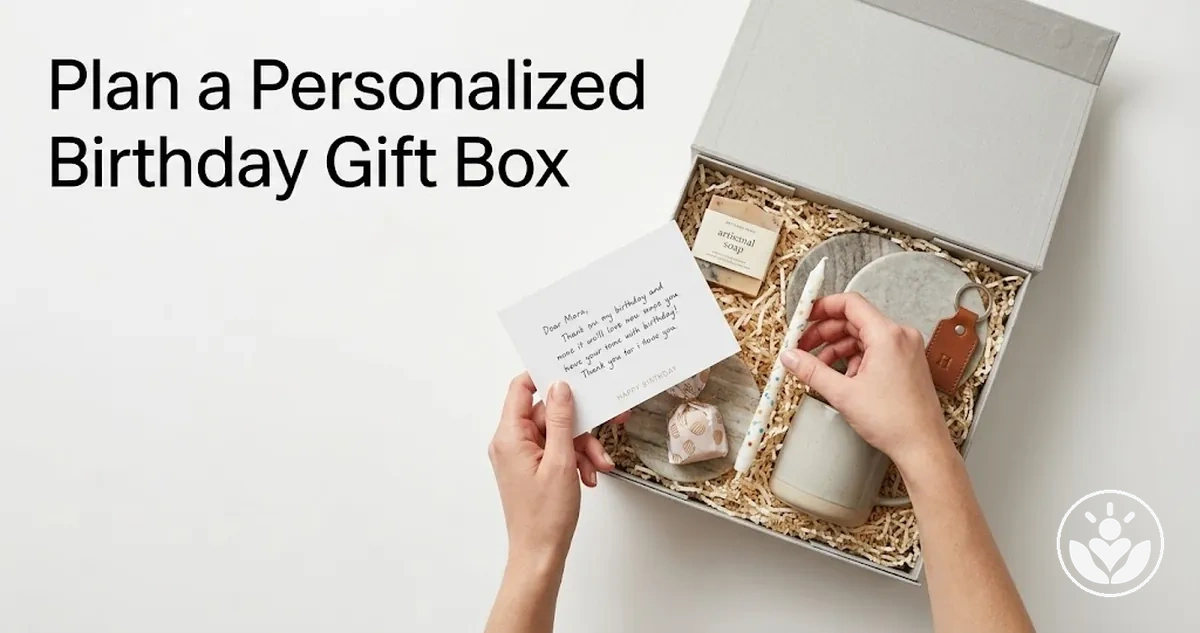
Birthday gift box planning sequence
Use these decisions in order. Each later choice should still pass the recipient-and-concept fit check established at the start.
- Establish recipient fitUse known interests and preferences, relevant life-stage or accessibility needs, practical constraints, and the giver-recipient relationship to define what is suitable.
- State one personal ideaDescribe the feeling or meaning the box should communicate in one clear concept that can guide later choices without forcing every item to look the same.
- Filter the theme and contentsUse theme cues that reflect the recipient, then give each selected item a clear role: focal, supporting, practical, or a personal touch.
- Add a meaningful personal detailUse a relevant name, date, shared reference, or concise note only when it suits the relationship and does not expose private information.
- Plan the revealMake the focal cue and personal message easy to notice, keep the opening order accessible, and check that the final presentation still expresses the same concept.
Final decision rule
A single concept can still produce different boxes: a quiet-evening idea may suit solitary routines for one recipient and shared activities for another. Recipient fit is the first planning filter; the sections below show how to carry that filter through the theme, contents, personalization, and reveal.
Table of Contents
Match the Birthday Gift Box to the Recipient
Recipient fit changes the plan when the recipient's life stage, preferences, sensitivities, practical constraints, or relationship with the giver affects suitability, tone, theme, contents, or the appropriate level of personalization.

Life stage can matter when it changes suitability or handling, while known interests and preferences can narrow the theme and contents toward things the recipient actually values.
Sensitivities or practical constraints can rule out otherwise relevant choices.
The giver-recipient relationship can also shape the tone, because personalization that suits a close relationship may feel too intimate in a more distant one.
For example, the same birthday theme could use a warm personal note for a close family member but a simpler message for a recipient with whom the giver has a less intimate relationship.
The underlying idea can remain consistent while the relationship context changes the appropriate tone and personalization.
Use recipient-specific criteria only when they materially change the birthday box; broader gift box ideas by occasion can support wider ideation after those criteria are clear.
This keeps recipient fit focused on meaningful differences rather than superficial audience labels or an expanding catalogue of gift ideas.
Adapt the Box to Age and Life Stage
Age and life stage matter only when they change suitability, handling, accessibility, or the recipient's practical circumstances for a birthday gift box.
Treat age as a planning condition rather than a substitute for knowing the recipient.
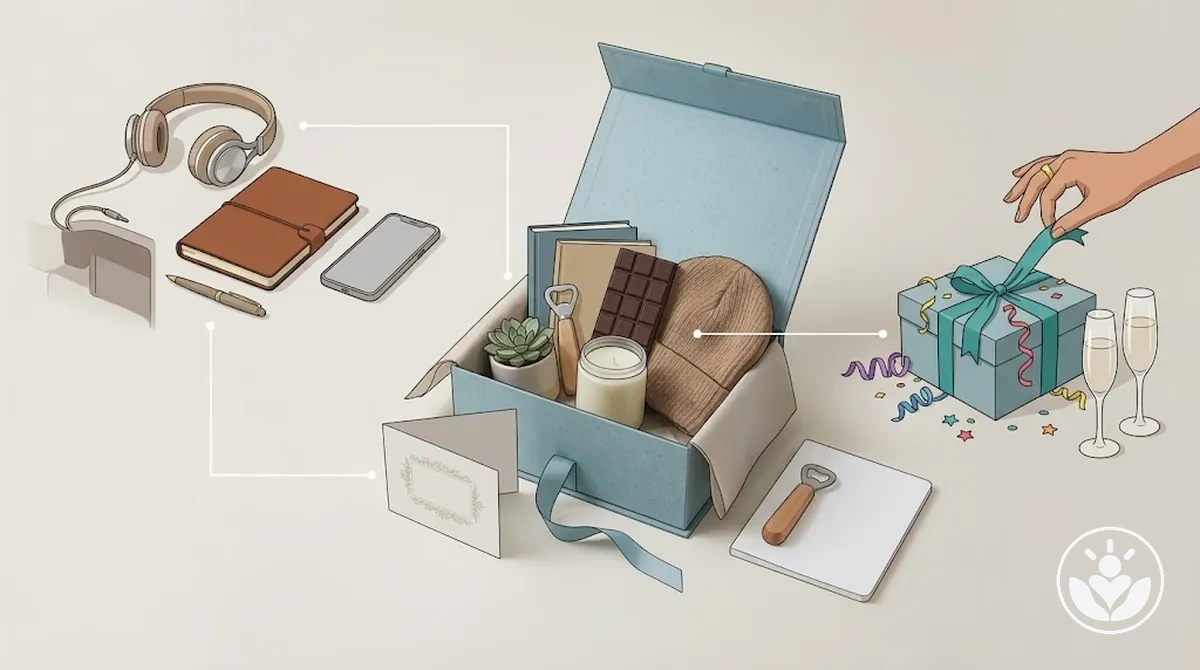
Where particular contents raise safety or appropriateness questions, check the relevant product guidance and the recipient's individual circumstances. Individual preferences still determine whether the contents, handling, tone, and presentation fit the recipient.
Use Interests, Preferences, and Your Relationship to Set the Tone
Known interests, stated preferences, and the giver-recipient relationship set the appropriate tone for a birthday gift box.
Use known recipient cues directly, and treat less certain cues from routines or interests as guidance rather than facts.
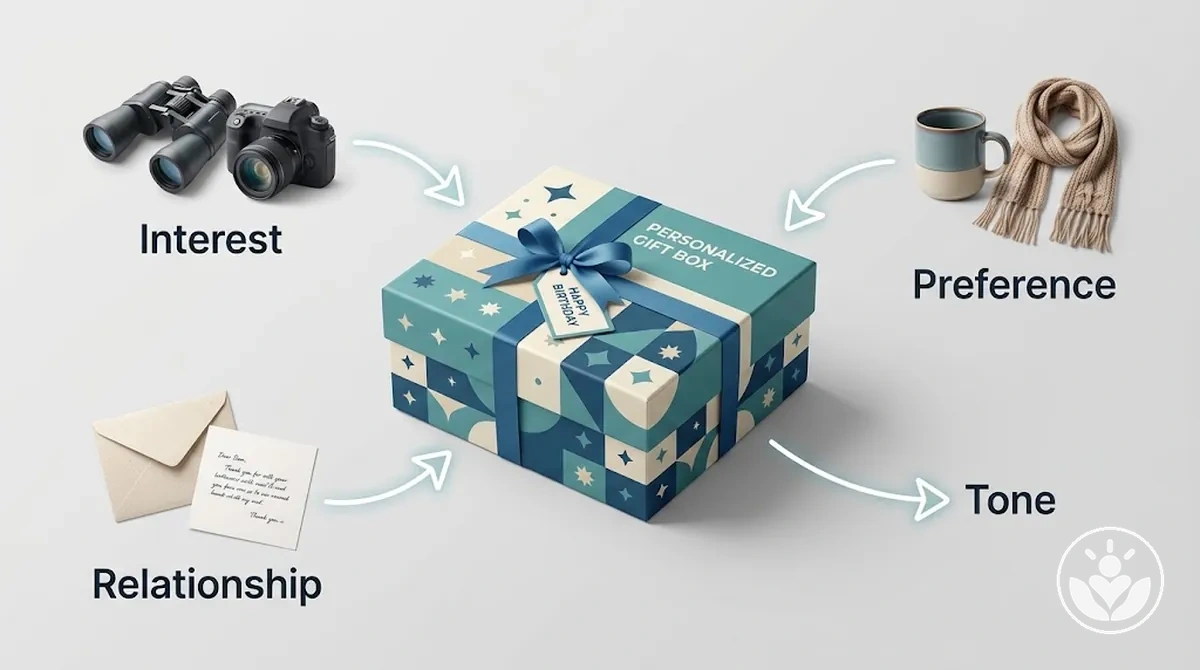
- Interests: A known hobby or interest can guide the theme and relevant item choices; if the interest is only inferred, keep the interpretation broad.
- Preferences or dislikes: Stated preferences and known dislikes provide direct criteria for including or excluding contents and refining the theme.
- Routines: Familiar routines can suggest practical item choices when they are genuinely known, but they should not be treated as evidence of private preferences.
- Relationship context: The relationship can guide the level of intimacy, personalization, and message tone; greater closeness does not by itself make highly personal contents appropriate.
For example, the same known interest could shape a playful, personal message for a close friend but a simpler message in a less intimate relationship.
The interest remains the same, while the relationship changes how that interest is expressed through tone and personalization.
Build the Birthday Box Around One Personal Idea
Build the birthday box around one personal idea that gives later choices a clear decision rule instead of leaving the selection disconnected.
The idea should reflect the recipient and intended feeling while remaining flexible enough to unify varied items without making them identical.
- Define the intended feeling: Decide what the birthday box should express for this recipient so later choices have a clear purpose.
- State the central idea: Turn that intended feeling into one personal idea that can guide the theme and selection.
- Apply practical constraints: Narrow the concept according to relevant constraints on the contents, presentation, or delivery while keeping the central idea intact.
- Run a coherence check: Check whether the final choices fit the personal idea, the birthday context, and the recipient without requiring every item to be the same type.
A practical constraint should refine the box concept rather than replace it.
If a particular selection does not fit the situation, adjust that choice while keeping the personal idea as the filter for the remaining contents.
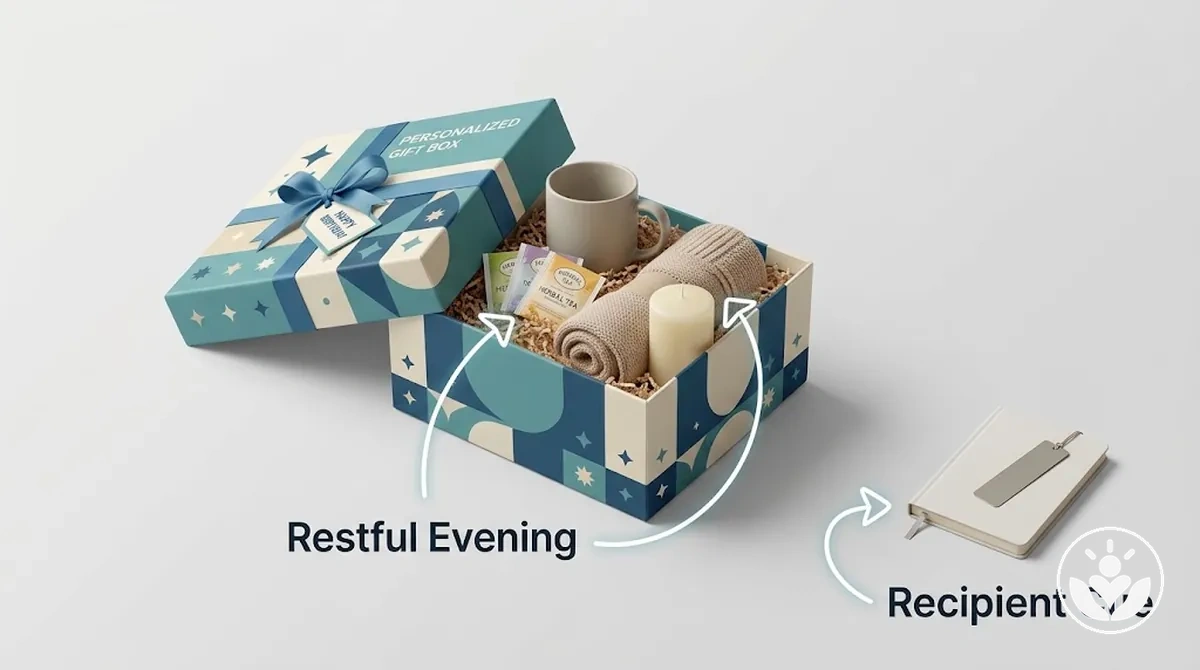
For example, a restful-evening concept could guide several different choices through a shared sense of calm without turning the theme into a fixed template.
This birthday-specific concept does not replace the broader method; use the gift box planning process when you need the full planning sequence, then make a final coherence check that the box still fits the recipient, birthday, and personal idea.
Set a Theme That Reflects the Recipient
A birthday theme should translate the personal idea into consistent cues that still reflect the recipient.
A recipient-led theme organizes choices around personal relevance, while decoration alone does not establish that relevance.
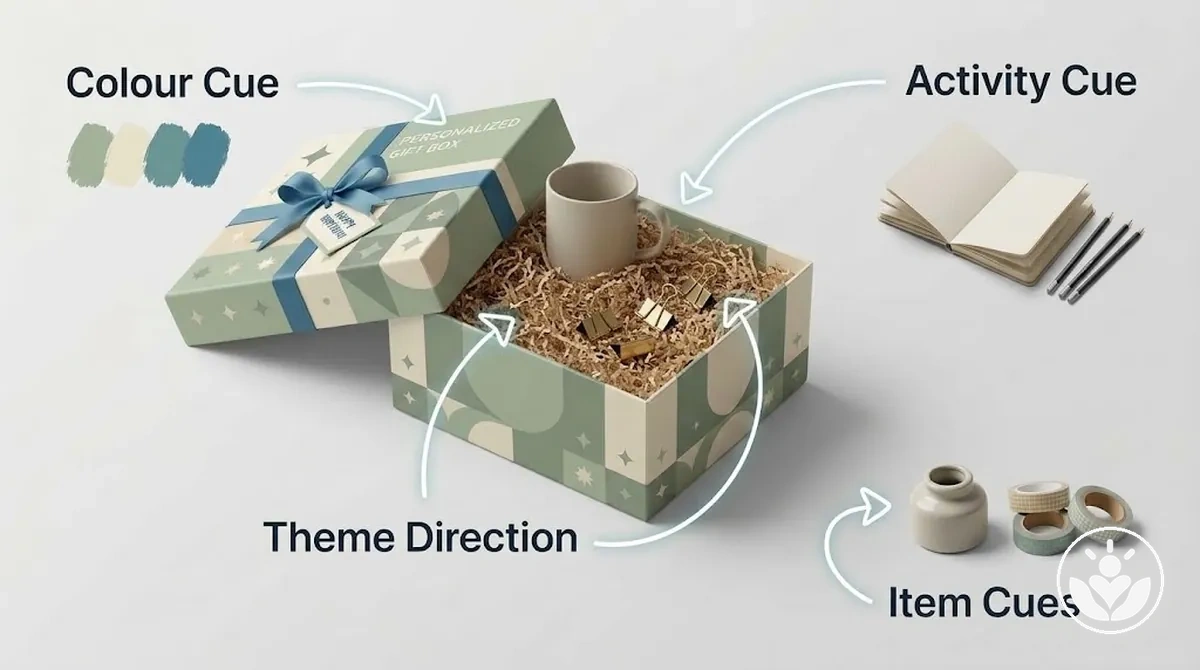
- Relevance: The theme direction should connect to the recipient or intended feeling, so colour, activity, and item cues support the personal idea rather than decoration alone.
- Flexibility: The birthday theme should allow variation in colour, activity, and item cues when those choices still fit the recipient-specific concept.
- Consistency: Supporting cues should relate clearly enough to the theme that the selection feels coherent without requiring every element to match visually.
For example, a recipient who enjoys quiet creative activities could have a theme that combines a restrained colour cue, an activity cue, and varied supporting item cues without making every choice identical.
For detailed selection guidance, choose a birthday theme using the broader theme process, then check that the result still feels personal rather than merely decorative.
Choose Birthday Contents That Fit the Recipient and Theme
Birthday gift box contents belong in the box when they serve a recipient-relevant role and support the theme.
Include items because they contribute to the concept, not simply because they are common birthday-box fillers.
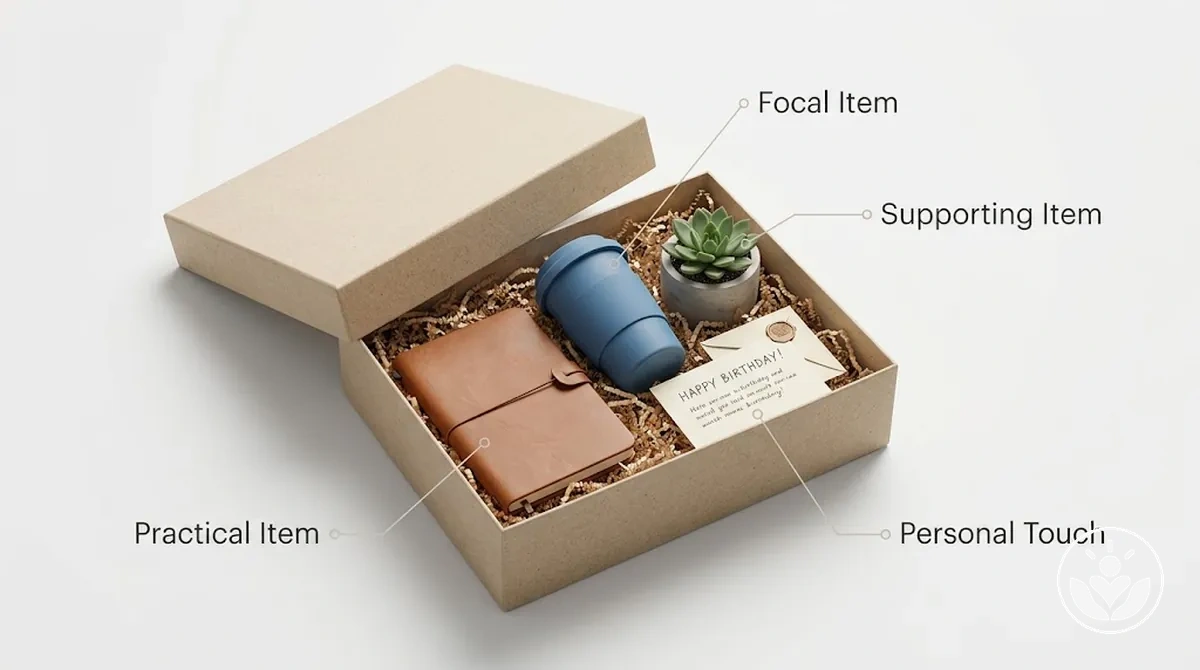
- Focal item: Anchors the concept; include it when its relevance to the recipient and theme is clear.
- Supporting item: Reinforces the focal item or theme; include it when it adds coherence without merely repeating the same role.
- Practical item: Adds a useful function; include it when that function suits the recipient and remains compatible with the theme.
- Personal touch: Adds recipient-specific meaning, such as a personal note; include it when the level of personalization suits the relationship and concept.
Evaluate each candidate item by its role, relevance to the recipient, and fit with the theme.
Include an item when those conditions support the birthday-box concept, and exclude it when it is irrelevant, unsuitable, or duplicates a role without adding value.
The exact item mix can therefore vary with the recipient's preferences and suitability needs rather than following a universal contents list.
For more detailed item options, choose birthday gift box contents using the dedicated contents guidance.
Keep only items that have a clear recipient-relevant role in the concept rather than aiming for a fixed item count or an exhaustive catalogue.
Personalize the Birthday Box with Meaningful Details
Personalization adds a meaningful detail that communicates recipient-specific meaning, whereas decoration can be attractive without being personal.
Effective personalization starts with a personal cue that is relevant to the recipient and expresses it in an appropriate part of the birthday box.
- Personal cue
- Known wording, a name, a date, or a shared reference with clear relevance to the recipient.
- Expression
- A note or customized detail used only when its specificity suits the recipient and the giver-recipient relationship.
- Placement
- The message, presentation, or an individual item—whichever makes the detail's meaning clear without distracting from the concept.
- Amount
- One relevant detail can be sufficient; more personalization does not inherently make the box more meaningful.
- Privacy boundary
- Use enough specificity for the recipient to recognise the connection without exposing sensitive or private information.
For example, a shared reference could appear as restrained wording on a message card while the rest of the box remains unchanged.
Add a Personal Note or Recipient-Specific Detail
A personal note or recipient-specific detail works when its specificity comes from a real connection to the recipient rather than from longer or more elaborate wording.
A specific reference can connect the birthday message to the recipient, the relationship, and a meaning that generic wording would not establish.
Keep the tone appropriate to the relationship, because the same type of reference can carry different meaning depending on how well the giver knows the recipient.
Specificity can come from one recognisable shared memory, milestone, or other genuine personal reference without including sensitive information.
The wording should remain concise enough that the recipient-specific detail stays clear and relevant to the birthday.
Prepare the Box for the Birthday Reveal
The birthday reveal should make the personal idea easy to recognize and access before visual spectacle is considered.
Treat the first impression as a combination of a visible focal cue, a clear personal message, and an opening experience that suits the recipient.
- Set the first impression: Position the focal cue so it is easy to notice when the birthday box is first opened, and check that it points clearly to the intended idea.
- Place the personal message: Keep the personal message visible or easy to reach early in the opening order, and check that its placement supports recognition rather than interrupting access.
- Check the opening order: Arrange the reveal sequence so important contents can be reached without unnecessary obstacles, adjusting the order when the box shape or recipient's accessibility needs require it.
- Run a final coherence check: Confirm that the focal cue, personal message, opening order, and accessibility still support the same recipient-specific birthday concept.
The exact reveal sequence can change with the box shape, the number of contents, and the recipient's needs.
Keep recognition and accessibility ahead of decorative spectacle, and use the final check to make sure the birthday reveal still feels coherent.
For example, if a personal message explains the meaning of a focal item, placing that message where it is encountered first can make the connection easier to recognize.
The reveal is ready when the opening order remains clear, accessible, and appropriate for the recipient.
Make the Personal Message Easy to Notice
Place the personal message where the recipient encounters it at the intended moment and can read it easily.
Suitable placement, visibility, and readability should make the message easy to notice without requiring it to be larger or more elaborate than necessary.
The best placement depends on the box layout and the timing of the opening experience.
Keep the message accessible and readable when the recipient is meant to see it so its role in recognition is clear.
For example, a note hidden beneath several contents may be noticed later than intended, while the same note placed where it becomes visible earlier can support recognition at the intended moment.
Keep the Opening Experience Clear and Intentional
A clear opening experience lets the recipient identify the focal idea, access the message, and understand the item grouping without unnecessary friction.
Clarity is judged by whether these parts make the concept recognisable as the box is opened.
- Focal cue visibility: Pass if the focal cue is noticeable when it needs to establish the concept; fail if other elements obscure what the recipient should recognise first.
- Message accessibility: Pass if the message is accessible and readable at its intended point in the opening experience; fail if its placement makes it difficult to find or read at that time.
- Item grouping: Pass if the item grouping makes the relationship between the contents and concept understandable; fail if the grouping makes that relationship unclear.
- Clutter: Pass if the recipient can distinguish the important elements without confusing clutter; fail if competing elements make the focal idea or contents difficult to interpret.
- Recipient and concept fit: Pass if the reveal still reflects the recipient and chosen concept; fail if the opening experience weakens that connection.
Box shape, item count, and recipient needs can change what passes verification, so assess clarity within the actual birthday box rather than against one fixed arrangement.
The final verification should confirm that the opening experience is understandable and intentional, not evaluate advanced styling.
Avoid Common Birthday Gift Box Planning Mistakes
Birthday gift box planning mistakes usually weaken recipient fit, coherence, timing, or the priorities of the reveal.
The most useful mistake test is whether a choice makes the birthday concept less relevant to the recipient or less coherent as a whole.
| Mistake | Likely consequence | Recognition cue | Corrective direction |
|---|---|---|---|
| Choosing around the giver's preferences | The contents may reflect what the giver likes more than what suits the recipient. | Most choices can be explained by the giver's tastes, with little evidence of recipient fit. | Recheck each important choice against known recipient interests, preferences, and needs. |
| Making the box a generic gift | The box may have weak personal relevance even when the individual items are suitable. | The same selection could be given to many recipients with little or no change. | Use a recipient-specific personal idea to filter the theme, contents, and personalization. |
| Ignoring age appropriateness | Some contents or presentation choices may be unsuitable for the recipient's circumstances. | Age or life stage materially affects suitability, handling, or expectations, but those conditions were not considered. | Check age appropriateness only where age or life stage changes suitability, while still using individual recipient preferences as the main guide. |
| Creating overload | Too many competing items or ideas can weaken coherence and add clutter to the reveal. | The box contains items that do not have a clear role in the chosen concept. | Remove or replace contents that do not support the recipient, theme, or a distinct role in the box. |
| Leaving planning too late | Limited timing may reduce the ability to make recipient-specific choices or prepare the intended box. | Important decisions are being made only after practical options have become constrained by time. | Identify the recipient, concept, and practical constraints early enough to adjust the plan when needed. |
| Prioritizing the reveal over recipient relevance | An elaborate reveal may distract from a concept that does not fit the recipient. | Presentation decisions receive more attention than whether the contents and personal details remain relevant. | Use recipient fit and concept coherence as the primary checks, then shape the reveal around those decisions. |
The correction pattern is to return each planning error to the recipient and the intended birthday concept.
Observable warning signs such as giver-first selection, unrelated contents, clutter, or last-minute constraints can identify where the plan needs adjustment.
The likely consequence can vary with the recipient and situation, so the correction should address the condition that created the mismatch rather than impose one fixed arrangement.
For example, a box may look coordinated but still function as a generic gift if its theme and contents could be transferred unchanged to almost anyone.
Rechecking those choices against known recipient preferences can restore recipient fit and prevent the mistake before the birthday box is finalized.