
Choosing Contents for a Personalized Gift Box
Put items in a personalized gift box when they are relevant to the recipient, appropriate for the occasion, and have a clear role—such as a focal gift, practical item, consumable treat, or sentimental addition. Choose a coherent mix that fits the box without crowding; there is no universal combination or fixed item count.
Gift box item decision assistant
Evaluate one candidate item at a time. The result is a decision cue, not a score: clear conflicts should be resolved first, then relevance, purpose, theme, and physical fit can be considered together.
Decision rule: Replace an item when a known recipient restriction or occasion conflict makes it unsuitable. Adjust the box or item mix when physical fit fails. Otherwise, weigh recipient relevance, clear purpose, and theme coherence together rather than relying on appearance alone.
After choosing individual items: adjust quantity until the box is neither crowded nor unintentionally sparse, and favour complementary roles over repetitive or unrelated variety.
Recipient relevance should guide selection before appearance alone. An item tied to a hobby, routine, preference, need, or shared memory can be suitable when it serves a clear purpose; the same type of item may be unsuitable for another recipient or occasion.
The occasion and intended theme narrow the choice further, while usefulness, personal meaning, and physical fit determine what each item contributes. Different combinations can work equally well when the complete mix makes sense for the recipient, intended experience, and available box space.
Table of Contents
Types of Items to Include in a Personalized Gift Box
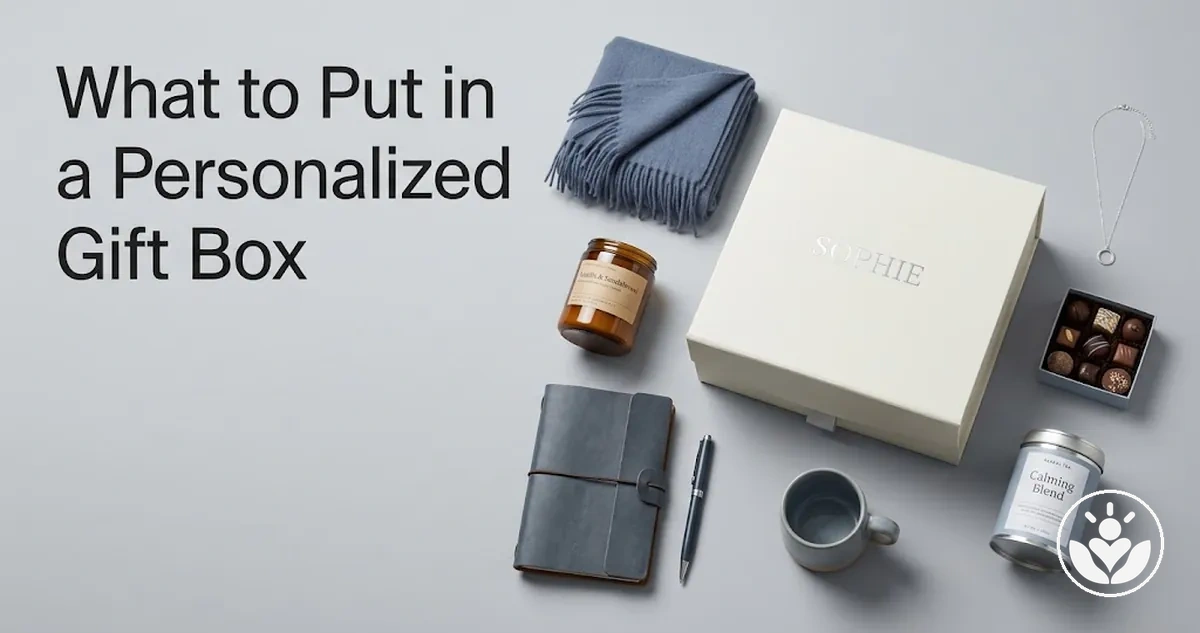
Gift box contents can be classified by the role each item plays for the recipient rather than by treating every possible product as a separate type.
The main roles are a focal gift, practical or useful items, consumable treats, and personal or sentimental additions, with each category contributing a different functional or emotional purpose.
These categories describe the contents of a personalized gift box, not the box construction, packaging style, or packaging material.
The image illustrates how different content roles can appear together in one gift box, while the list distinguishes each role and the context in which it may be suitable.

- Focal gift: A main or especially meaningful item that gives the gift box a clear point of emphasis, such as a keepsake or an item connected to the recipient's interests.
- Practical or useful items: Contents chosen for likely use in the recipient's routine, interests, comfort, or convenience.
- Consumable treats: Food, drinks, or similar consumable items that can add enjoyment when they suit the recipient's preferences and relevant dietary or sensitivity constraints.
- Personal or sentimental additions: Notes, photos, keepsakes, or other small items that add a message, memory, or relationship-specific meaning.
Focal Items
A focal item is optional and, when used, acts as the main or most salient gift in the set, giving the personalized gift box a clear point of prominence without requiring every box to have one dominant object.
Its role can come from recipient relevance and purpose as well as size, so the focal item does not need to be the largest item in the box.
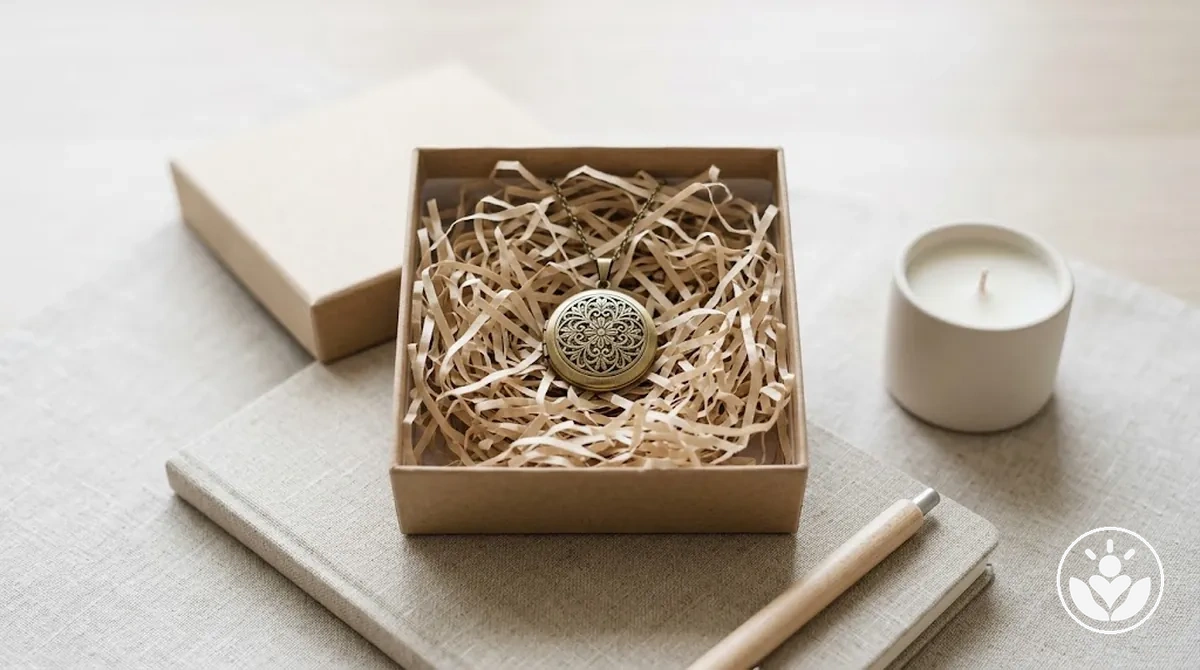
Prominence may come from personal meaning, practical purpose, visual size, or a strong connection to the recipient; for example, a small meaningful keepsake can function as the main gift even when larger supporting items are present.
The focal item's role then helps define which supporting items make sense alongside it, with supporting contents reinforcing rather than competing with its purpose.
Practical and Useful Items
Practical items are useful when they match a recipient's routines, interests, needs, or likely use.
Their usefulness comes from a clear intended use within the recipient context, such as supporting a daily routine, hobby, comfort need, or regular task.
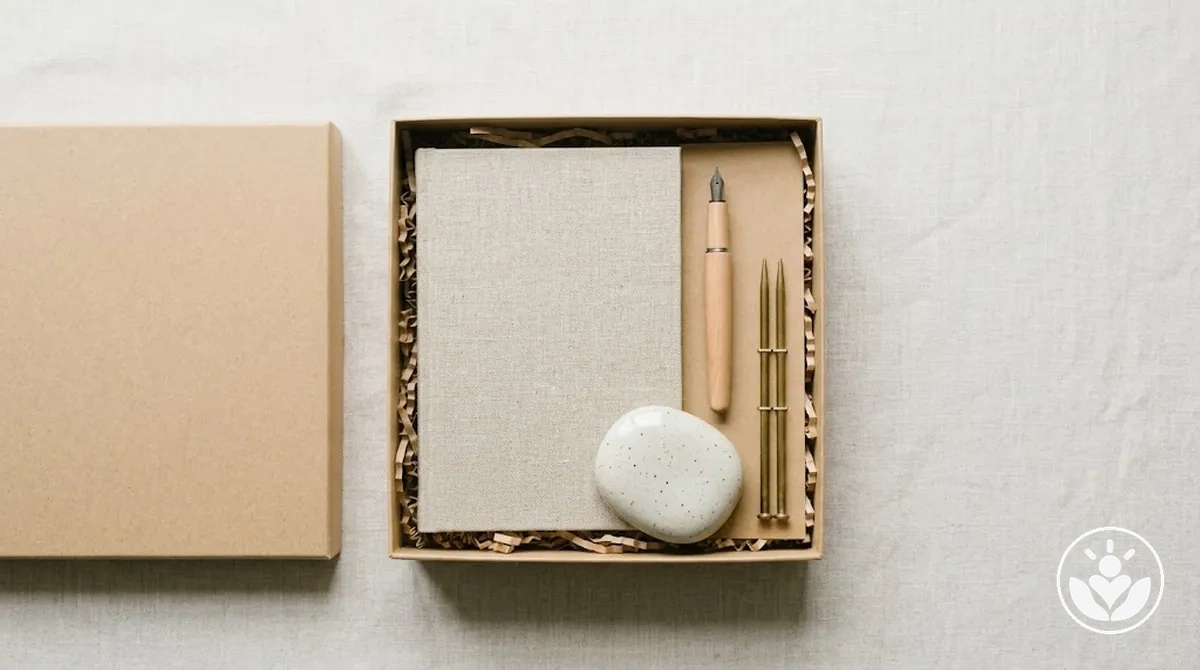
Recipient-specific usefulness is different from generic utility: an item can be broadly functional without being particularly relevant to the person receiving it.
For example, a notebook has greater practical relevance for someone who regularly writes or plans, while a hobby-related accessory is useful when it supports an interest the recipient actually pursues.
- Daily use: Fits something the recipient regularly does or uses.
- Hobby relevance: Supports a known interest or activity.
- Comfort: Addresses a recipient-specific comfort need or preference.
- Convenience: Makes a familiar routine or task easier to manage.
Consumable Treats
Consumable treats can work in a personalized gift box when they match the recipient's taste preferences and known dietary or sensitivity constraints.
Tea, chocolate, snacks, or similar food items can add variety and enjoyment, but they are suitable only when the recipient's preferences, dietary restrictions, and allergies do not make them a poor fit.
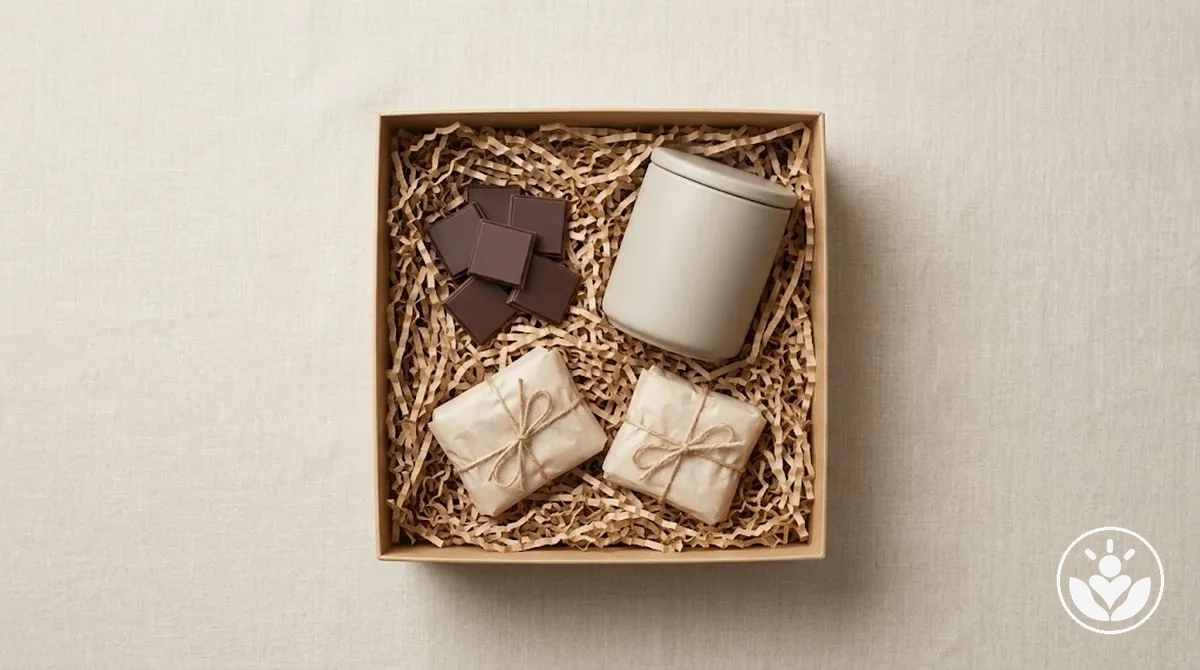
The occasion and shelf stability also affect suitability: a treat should suit the gifting context and remain appropriate for the expected time before it is consumed.
The image illustrates possible consumable variety rather than items that suit every recipient.
Screening consumables therefore requires both preference matching and checking conditions that may exclude an otherwise appealing choice.
- Taste preferences: Include a treat when its flavour or type matches something the recipient is known to enjoy.
- Dietary restrictions: Exclude items that conflict with known dietary requirements.
- Allergies or sensitivities: Avoid a consumable when a known allergy or sensitivity makes the item inappropriate for that recipient.
- Shelf stability: Check the use-by or best-before date and the stated storage conditions; choose an item that remains suitable through the expected gifting and consumption period.
- Occasion fit: Include the treat when its type and presentation are appropriate for the intended gifting context.
Personal and Sentimental Additions
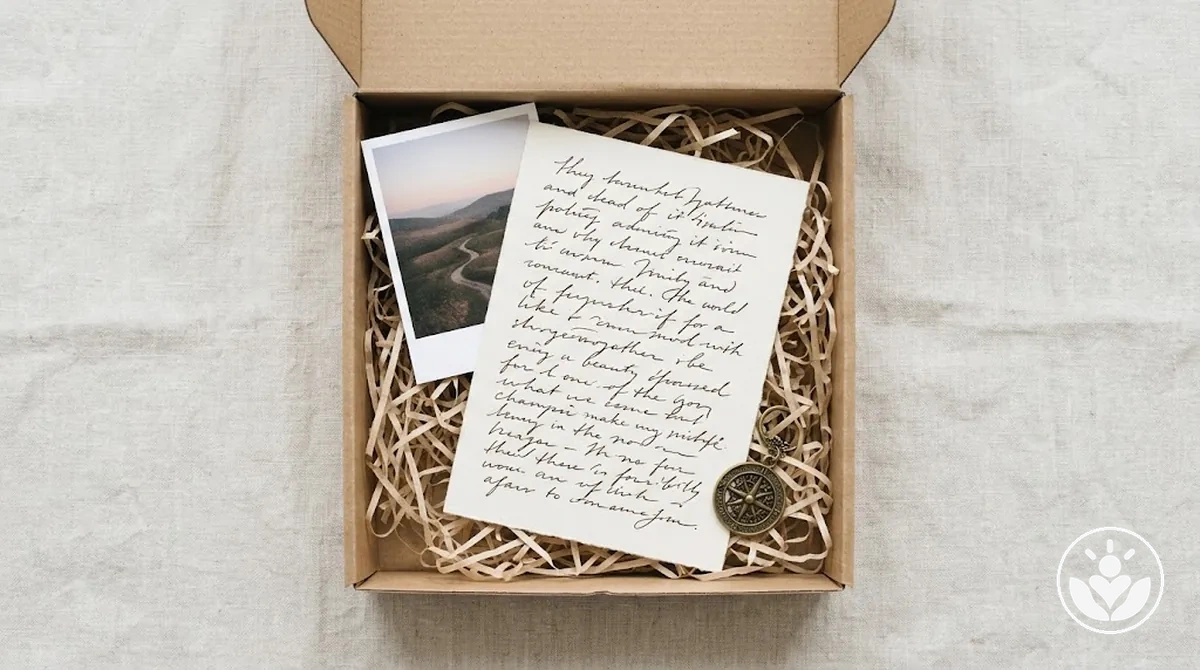
Personal and sentimental additions are items that carry a message, memory, relationship cue, or recipient-specific meaning within a gift box.
A personal addition might be a handwritten note, a photo connected to a shared memory, or a small keepsake whose meaning comes from its relevance to the recipient rather than from its size or appearance; the image illustrates these forms of personal meaning.
Key distinction
Meaningful personalization
The detail connects to the recipient, relationship, or shared context—for example, a photo linked to a specific memory.
Decorative customization
The item may look personalized, but decoration alone does not create recipient-specific meaning when the detail has no relevant personal connection.
The value of a sentimental item therefore comes from its relevance and context, not novelty alone.
What Makes an Item Suitable for a Personalized Gift Box
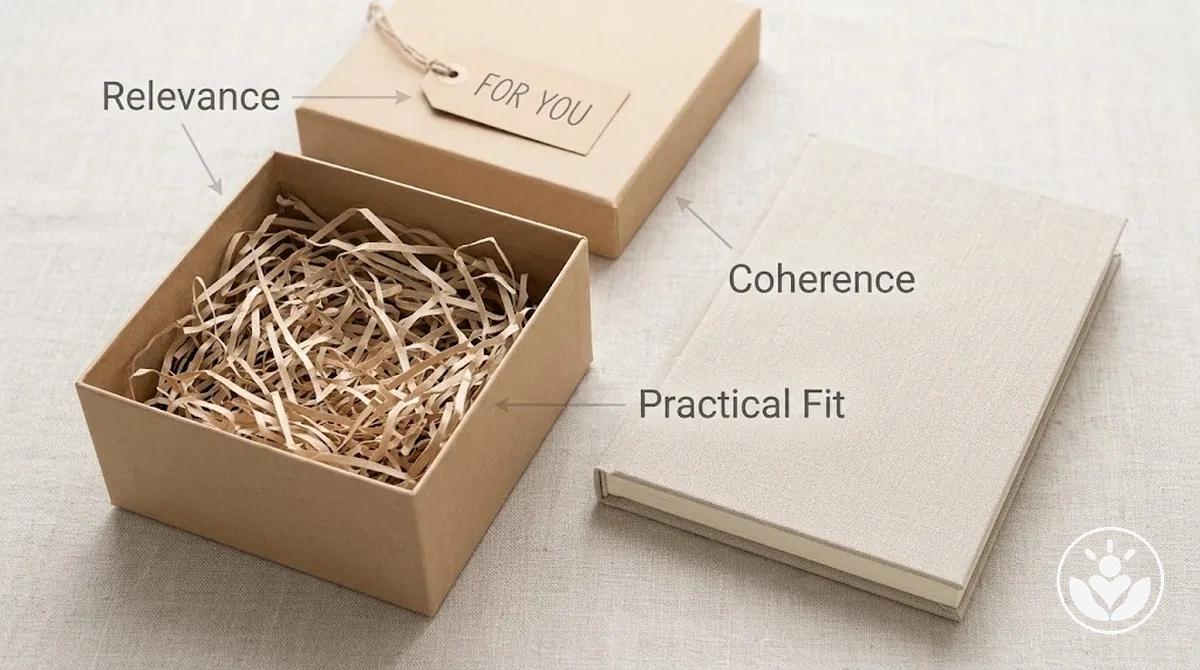
Item suitability depends on recipient relevance and occasion fit, theme compatibility, quality, usefulness or meaning, and practical fit with the other contents.
A candidate item can meet some of these criteria and still be unsuitable when another condition creates a clear mismatch; the image illustrates how relevance, coherence, and physical fit can be considered together.
The criteria interact rather than carrying universally equal importance.
Recipient relevance may matter more when the gift is highly personal, while occasion fit can exclude an item that would be appropriate in another setting.
Theme compatibility affects whether the item supports the intended purpose or coherence, while quality, usefulness, meaning, and practical fit affect what the item contributes when included.
No single criterion therefore decides suitability in every context.
For example, a compact notebook may be suitable for a recipient who regularly writes when it also suits the occasion, supports the intended theme, and fits comfortably with the other contents.
A visually appealing novelty item may be poorly matched when it has little recipient relevance, conflicts with the theme, or occupies space without adding relevant usefulness or meaning.
The same type of item can therefore have a different suitability implication when its context changes.
- Recipient relevance and occasion fit: The item should make sense for the recipient and remain appropriate to the gifting occasion.
- Theme compatibility: The item should support the intended theme, purpose, or overall coherence rather than conflict with it.
- Quality, usefulness, or meaning: The item should contribute through its condition and quality, likely usefulness, personal meaning, or a relevant combination of these qualities.
- Practical fit: The item's size, shape, weight, or fragility should allow it to fit appropriately with the box and other contents.
Recipient Preferences and Occasion Fit
Recipient preferences and the occasion matter when they change an item's relevance, usefulness, appropriateness, or practical constraints.
Known interests and recipient needs can make an item more relevant, while relationship context, dietary restrictions, sensitivities, or expectations associated with the gifting occasion can change whether the same item is appropriate for item selection.
When context changes suitability
Food treat
If the recipient enjoys it and has no known conflicting dietary restriction or sensitivity, it can be a suitable candidate.
If not, exclude or replace it rather than relying on its general appeal.
Humorous keepsake
If the relationship and occasion support an informal tone, it may fit well.
If not, reconsider it when the occasion or relationship calls for a different tone.
These differences are contextual rather than fixed audience rules; when the broader recipient, occasion, and constraints are not yet clear, plan the gift box first.
Fit With the Chosen Theme
Theme fit describes how an item supports the chosen theme through semantic fit, function, or style in relation to the intended mood, purpose, or experience.
An item can contribute to thematic coherence without looking identical to the other contents or belonging to the same product category.
Theme fit is more than colour matching
Stronger theme fit
An item supports the intended purpose or experience. A practical item that helps someone relax can strengthen a relaxation theme even when it does not visually match every other item.
Weaker signal
An unrelated item that merely matches the box colour may look coordinated, but appearance alone does not establish recipient relevance or suitability.
Evaluating theme fit determines whether an item supports an established theme; if the theme itself still needs to be defined, match contents to a theme.
Quality, Usefulness and Meaning
Quality, usefulness, and meaning are separate value dimensions that can affect an item's suitability for a personalized gift box.
Quality concerns whether the item's condition and construction are acceptable for its intended role, usefulness depends on its relevance to the recipient, and meaning comes from personal or symbolic significance such as a memory or relationship connection.
An item does not need to maximize all three dimensions to contribute value.
A simple notebook in acceptable condition may have strong usefulness when it supports the recipient's regular writing routine, while a modest keepsake may contribute primarily through personal meaning connected to a shared memory.
The relevant dimension depends on context, so suitability comes from the value the item contributes rather than its price or status.
These three dimensions provide distinct ways to assess that contribution.
- Quality: When an item's condition and construction are appropriate for its intended role, quality supports its suitability without implying that a higher price means greater value.
- Usefulness: When an item has a likely use connected to the recipient's routine, interests, or needs, its practical value strengthens its suitability.
- Meaning: When an item carries recipient-specific significance through a memory, relationship, or personal connection, that meaning can strengthen its suitability even if the item is modest.
Appropriate Size and Practical Fit
An item has practical fit only when its item dimensions, shape, weight, fragility, and required box space work with the intended box and the other contents.
These physical properties affect whether the item can be included without forcing, excessive crowding, or creating avoidable problems for a fragile item.
For example, one bulky item may occupy enough box space that several compact items no longer fit without crowding, while choosing the compact items may allow a more workable item mix.
A heavy, fragile, or unusually shaped item can also change which other contents remain practical to include.
Detailed dimensions depend on the specific box and contents, so when that decision is required, match the box size to the contents.
The following physical criteria help determine whether to include an item, exclude it, or adjust the item mix.
- Item dimensions: The item's size must leave enough box space for the other intended contents without forcing them together.
- Shape: An awkward or irregular shape can use more usable space than a compact item of similar overall size.
- Weight: A heavier item can affect which lighter or more delicate contents remain practical to include alongside it.
- Fragility: A fragile item may be unsuitable when the available space would place it in close contact with heavier or rigid contents.
- Space demand: If one item creates excessive crowding, excluding it or changing the item mix can improve practical fit.
How Many Items to Include in a Gift Box
There is no universal correct item count for a gift box.
The feasible range depends on box capacity, item size and item scale, the desired variety, and whether the finished contents have enough space to feel intentional rather than crowded or sparse.
What changes the practical item count
Larger or bulkier items
The feasible count generally decreases because each item uses more of the available box capacity.
Smaller or compact items
A higher count may fit, but only when added items contribute relevant variety without creating crowding.
Crowded result
Reduce the count, change item scale, or change the item mix when contents must be forced together or create impractical fit.
Sparse result
A lower count can still work when larger or more significant items use the space intentionally; otherwise adjust the mix rather than adding filler.
For example, a box containing a few bulky items can use its capacity as effectively as another box containing several compact items, because the appropriate count changes with the space each item requires.
Fixed-number gifting traditions or recurring gift counts can provide a convention for a particular context, but they do not establish a universal requirement.
Choose the item count that allows the intended contents and variety to work within the available box capacity without making the item mix crowded or unintentionally sparse.
Matching Item Count to Box Size and Item Scale
The feasible count generally decreases as selected items occupy more of the available interior space within the same box capacity.
Item dimensions and volume determine how much space each item uses, so a larger item scale leaves less capacity for additional contents before crowding occurs.
Few large items can use most of the available space with a relatively low quantity, while mixed-size contents allow smaller items to use space left around larger ones without implying a fixed count.
Several compact items can permit a higher feasible count under otherwise similar conditions because each item requires less volume.
These patterns are conditional rather than fixed templates: the same quantity can create crowding when item dimensions are large relative to box capacity but leave excessive empty space when the items are compact relative to that capacity.
The practical limit is the count at which the selected item scale remains compatible with the available space without excessive crowding or unintended empty space.
- Few large items: When individual items occupy a substantial share of the available volume, the feasible count is lower because each item consumes more of the box capacity.
- Mixed-size items: When larger and smaller items share the available space, the feasible count depends on their combined dimensions and volume rather than the number of pieces alone.
- Several compact items: When each item occupies relatively little space, a higher feasible count may fit before the combined contents create crowding.
Fixed Gift Rules and Flexible Item Counts
A fixed-number rule follows a chosen gift tradition or personal convention, while a flexible count changes according to the conditions of the gift box and its contents.
The distinction separates convention-based counting from practical fit rather than treating a chosen fixed count as a requirement for every gift box.
Someone may intentionally follow a five- or seven-gift convention when that fixed count is part of the intended gifting approach.
A flexible count is more responsive when box size, item scale, recipient needs, or desired variety change how many suitable items can fit together.
The relevant counting approach therefore depends on whether following the convention itself is part of the intent or whether the contents need to determine practical suitability.
| Counting approach | Governing basis | Suitable context | Limitation |
|---|---|---|---|
| Fixed-number rule | A chosen gift tradition or personal convention sets the count. | Useful when intentionally following that convention is part of the gifting context. | The fixed count does not adjust automatically for box size, item scale, recipient needs, or variety. |
| Flexible count | Box size, item scale, recipient needs, desired variety, and practical fit determine the quantity. | Useful when the selected contents and available space need to govern item selection. | The quantity remains condition-based rather than being predetermined by a counting convention. |
Balancing Variety Across Gift Box Contents
Useful variety across gift box contents comes from complementary differences in item role, experience, or function rather than adding unrelated items simply to increase the item mix.
Variety supports coherence when each difference remains relevant to the recipient or intended theme, while unnecessary duplication can create redundancy without adding a distinct purpose.
Practical and indulgent items can provide different experiences, consumable and lasting items can differ in how long their value is experienced, and focal and supporting items can contribute different levels of emphasis.
These dimensions are examples of complementary roles rather than categories that every gift box must contain.
The following pairings show how variation can change the item mix while preserving a coherent purpose.
- Practical and indulgent: A practical item can address likely use while an indulgent item adds enjoyment, provided both remain relevant to the recipient and occasion.
- Consumable and lasting: A consumable item provides an experience that is used or enjoyed, while a lasting item can remain useful or meaningful after the consumable is gone.
- Focal and supporting: A focal item provides the main point of emphasis, while supporting items can add variety by reinforcing its purpose without competing with it.
For example, a writing-themed box with a focal notebook, a practical pen, and a consumable treat suited to the recipient can provide coherent variety because the contents have distinct but compatible roles.
An item mix assembled from unrelated novelties simply because they look different can increase variety while weakening recipient relevance and thematic coherence.
When the task moves from evaluating variety to deciding how the complete mix should work together, curate gift box items.
Gift Box Contents Checklist
Use this gift box contents checklist to verify that the selected items have recipient relevance, occasion fit, theme compatibility, practical value, and physical fit while providing appropriate quantity and variety without known recipient conflicts.
Use each check to reach a practical keep, reconsider, replace, or confirm decision; do not turn the checklist into a numeric score.