
Fragile glass
Prioritise cushioning and separation where decorative loose filler alone does not provide enough support or protection from hard surfaces.
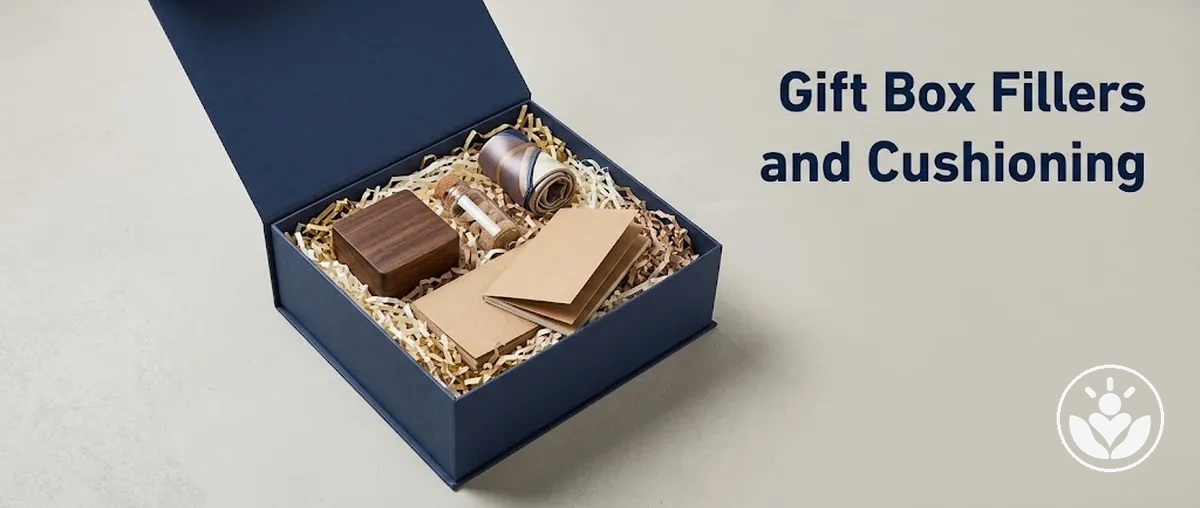
Gift box fillers and cushioning improve presentation and occupy space around gift contents, but the right choice depends on the job the material must do. Use decorative filler for visual volume and suitable light support; use protective cushioning when fragile contents need restraint, separation, surface protection, or impact absorption.
Choose filler by the job it must do
Start with the primary function, then check the item's fragility and weight, surface sensitivity, available void, likely movement, and how the material behaves when compressed.
Wrap or presentation
Tissue paper suits broad surface coverage and soft layering. Shredded or crinkle paper suits visible loose-fill volume around suitable lightweight, non-fragile items.
Fill voids with light support
Shredded paper adds loose-fill volume; crinkle paper's folds help it retain loft. Support still depends on quantity, compression, placement, and item weight.
Protect fragile contents
Choose cushioning for the required separation, surface protection, compression resistance, and impact absorption. Decorative fullness alone is not proof of protection or movement control.
Reduce material or waste
Meet the required protective or decorative function first, then reduce material where practical, reuse clean material, or match recyclable or compostable options to local end-of-life pathways.
Quantity check: there is no universal gram figure. Use enough material for the required support or presentation while ensuring the lid closes without force and the filler is not excessively compressed.
Material suitability changes with fragility and weight, available space, compressibility, placement, and handling conditions. Decorative filler and protective cushioning can overlap, but they are not interchangeable: the material's structure and placement determine how well it supports or protects the contents.
Primary function is the clearest basis for comparing decorative filler with protective cushioning.
Decorative filler primarily contributes visual volume and presentation, while protective cushioning is selected for restraint, surface protection, or impact absorption.
Some materials can serve both functions when their structure and placement provide enough support for the gift contents.
Performance depends on density, compressibility, placement, movement, surface contact, and the item being protected.
A material's label alone does not determine its protective role; these properties affect how it supports, separates, or cushions an item.

| Criterion | Decorative filler | Protective cushioning | Practical implication |
|---|---|---|---|
| Primary purpose | Adds visual volume, colour, texture, and presentation | Provides restraint, surface protection, or impact absorption | Choose according to the main function required around the gift contents |
| Structure / compressibility | May be loose or easily compressed to create visual volume | Needs enough structure after compression to maintain the required cushioning or separation | Compression can change how much support a material provides |
| Movement control | Can provide some support when densely and appropriately placed | Can restrain movement when its structure and placement suit the item | Visible fullness alone does not establish effective restraint |
| Surface protection | May separate items from surrounding surfaces, depending on coverage and material | Can provide a protective contact layer when coverage and material properties suit the surface | Fragile or easily marked surfaces require protection suited to their contact points |
| Impact absorption | May offer limited cushioning when its structure and density allow compression | Is selected to absorb or distribute impact when its cushioning properties suit the item and handling conditions | Fragile contents require function-based cushioning rather than appearance alone |
| Presentation effect | Primarily shapes visual fullness, colour, texture, and the appearance of arranged contents | May also influence appearance through its form and placement | Protective function and presentation can overlap without being equivalent |
For a lightweight, non-fragile item, decorative filler may provide support while helping to improve gift box presentation.
A fragile glass item places greater importance on cushioning, separation, and surface protection, even when those materials also affect appearance.
Protective cushioning can help limit movement when its density, compression, and placement suit the item, but restraint remains a separate practical requirement.
Where movement is the main concern, the next task is to stop items from shifting rather than assume decorative fullness provides sufficient control.
Neither category is universally superior because the required function changes with the gift contents and handling conditions.
Types of gift box fillers and cushioning are most usefully classified by physical form and primary function inside the box.
The main classes include loose paper filler, sheet material, natural-fibre filler, and protective cushioning, with each providing a different combination of volume, surface contact, or structural support.
Physical form helps distinguish how each class occupies space, compresses, covers surfaces, or provides protective capacity.
Grouping by these properties, rather than colour, brand, or occasion, keeps the categories tied to their practical function.
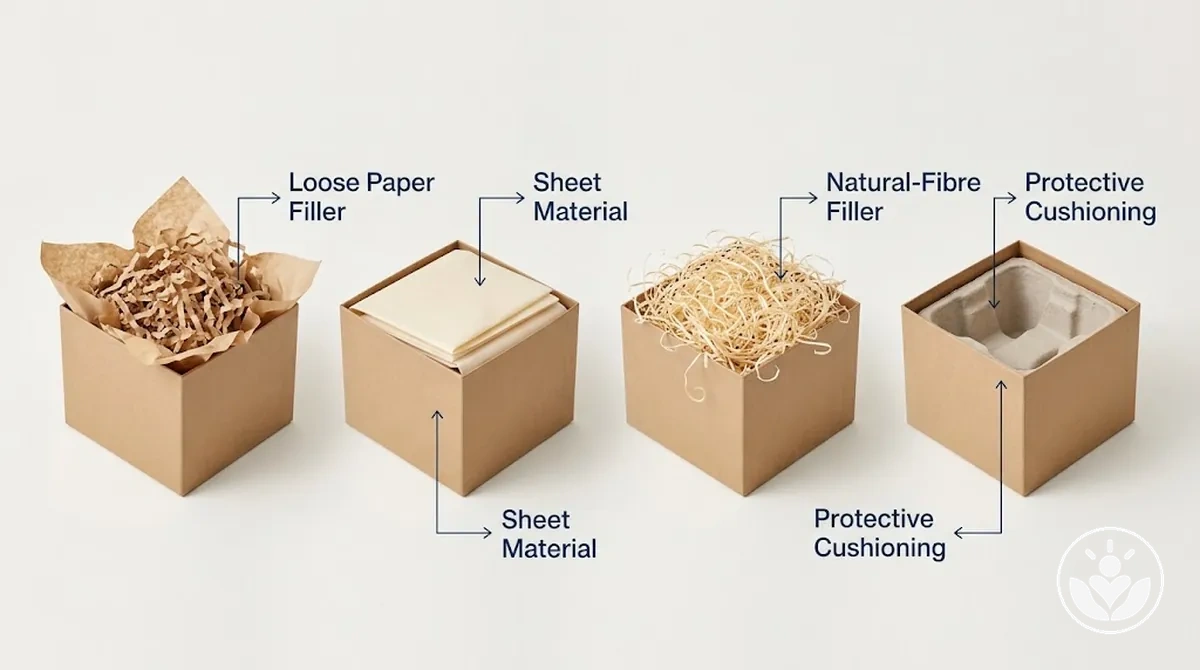
These filler and cushioning classes describe materials used within a gift box rather than the container or wider packaging format.
Broader gift box packaging types cover the box and packaging-material context beyond this filler classification.
The categories here therefore identify material form and typical function, not the broader packaging context.
Tissue paper, shredded paper, and crinkle paper differ mainly in physical form: sheet form, straight strips, and crimped folds.
These forms change loft, compressibility, shape retention, surface coverage, and support inside a gift box.

| Option | Physical form | Loft / shape retention | Support | Surface coverage | Typical fit |
|---|---|---|---|---|---|
| Tissue paper | Thin, flexible sheets | Low loft; compresses and folds readily | Provides soft layering rather than structured loose-fill support | Broad coverage when wrapped or layered | Wrapping, lining, soft layering, and presentation |
| Shredded paper | Loose, straight strips | Adds loft but settles or compresses with pressure | Can provide light support when enough paper surrounds the item | Partial contact around surfaces and gaps | Loose-fill volume and support for suitable lightweight items |
| Crinkle paper | Loose strips with crimped folds | Crimped structure creates loft and helps the strips retain shape | Can provide support when quantity, compression, placement, and item weight are suitable | Partial contact around surfaces and gaps | Loose-fill volume where greater shape retention is useful |
Tissue paper is typically suited to wrapping or soft layering because its sheet form provides broad surface coverage.
For example, tissue paper can wrap an item while shredded paper or crinkle paper provides loose-fill volume around it.
Crinkle paper's crimped folds can retain loft differently from straight shredded paper, while actual support depends on quantity, compression, placement, and item weight.
Suitability therefore follows the intended use rather than a universal winner.
Protective cushioning for fragile contents addresses four main needs: impact absorption, separation, surface protection, and compression resistance.
The required property depends on the item's fragility, weight, exposed edges, surface sensitivity, and expected movement.
Cushioning materials can be grouped by the protective function their physical structure can provide.
The material still needs to suit the item's contact points, weight, and expected compression.
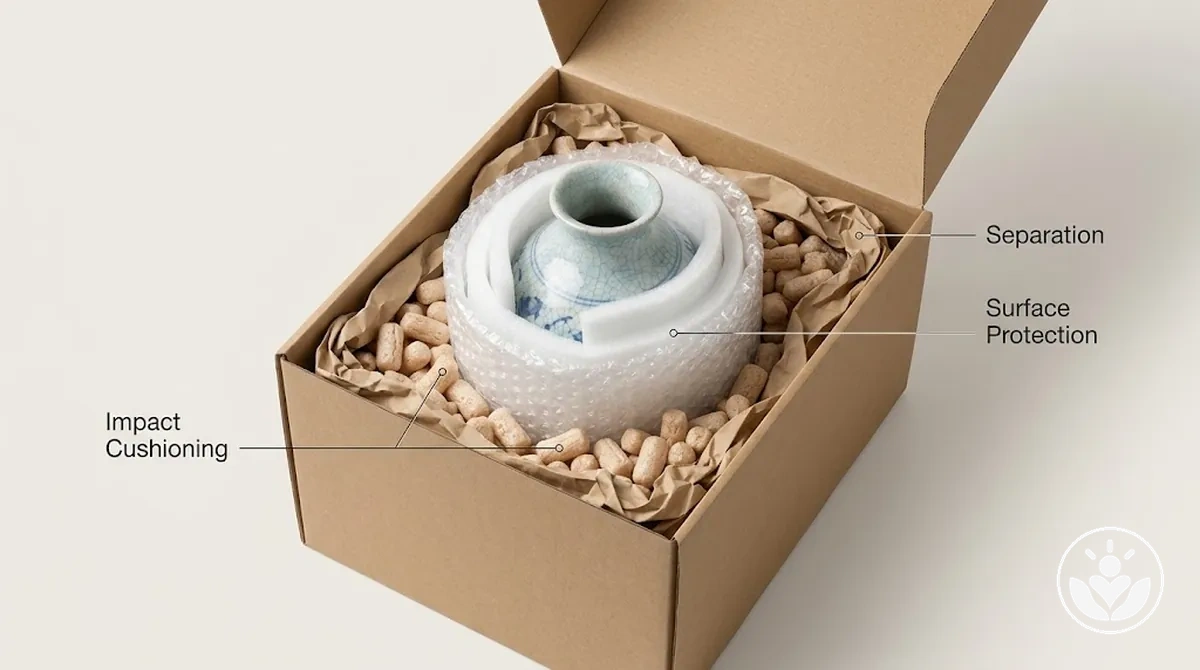
Cushioning choice defines the required protective properties, while spatial placement determines how those materials surround the item.
The next boundary is how to arrange gift box items so cushioning and contents are positioned appropriately.
Filler or cushioning should be chosen by required function and item characteristics because no single material fits every situation.
Selection starts by deciding whether the contents need presentation, support, cushioning, surface protection, or a combination of these functions.
Function comes first, followed by the physical conditions that affect suitability.
The criteria below move from item protection needs to secondary presentation and handling preferences.
Different gift contents can therefore require different filler functions even within similar boxes.
The examples below show how fragility, surface sensitivity, and support needs change the selection rather than defining one material as universally suitable.
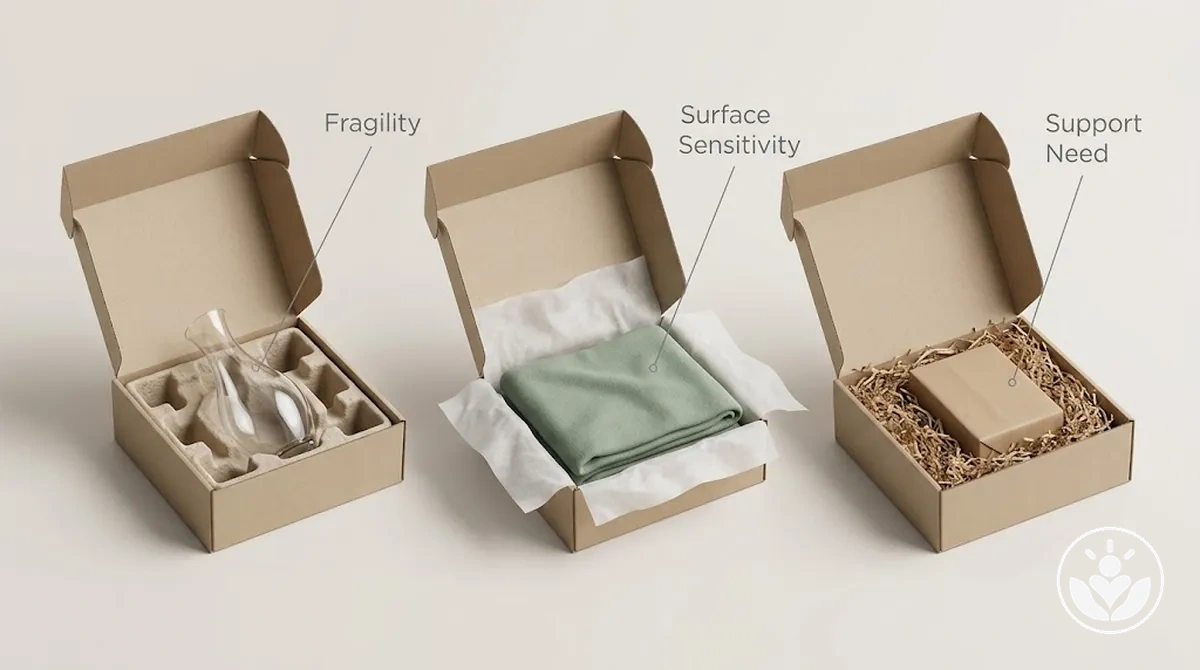
Examples by item profile
Fragile glass
Prioritise cushioning and separation where decorative loose filler alone does not provide enough support or protection from hard surfaces.
Soft textile
Tissue paper or another gentle material can suit a case where presentation and soft surface contact matter more than impact cushioning.
Lightweight boxed item
Loose filler can suit the item when it provides the required volume and support without excessive compression.
Suitable filler or cushioning fits the required function, the gift contents, and the conditions the material must handle.
Secondary preferences such as presentation or handling should refine that fit without overriding necessary support or cushioning.
The right amount of filler and cushioning is enough to provide the required support or presentation without overpacking the box.
No single weight or volume applies to every box and material because filler properties and gift contents change the quantity needed.
Filler quantity depends on the available void, filler density, compression, desired fill height, item weight, and intended function.
Decorative volume and protective cushioning can require different amounts because their functions and compression behaviour differ.
These variables should be considered together rather than treating filler weight as a fixed conversion to filled volume.
Box dimensions and item volume establish the space that can remain as available void, while filler density, material loft, and compression determine how much material occupies that space.
Because those properties differ between filler types, a quantity measured by weight cannot be converted reliably into a universal filled volume.
Any quantity range is therefore meaningful only when the filler type, box dimensions, contents, and relevant packing conditions are defined.
Physical checks show whether the amount is sufficient without relying on a universal gram figure.
Compare the fill state by looking for remaining void, adequate support, or excessive compression and lid crowding.
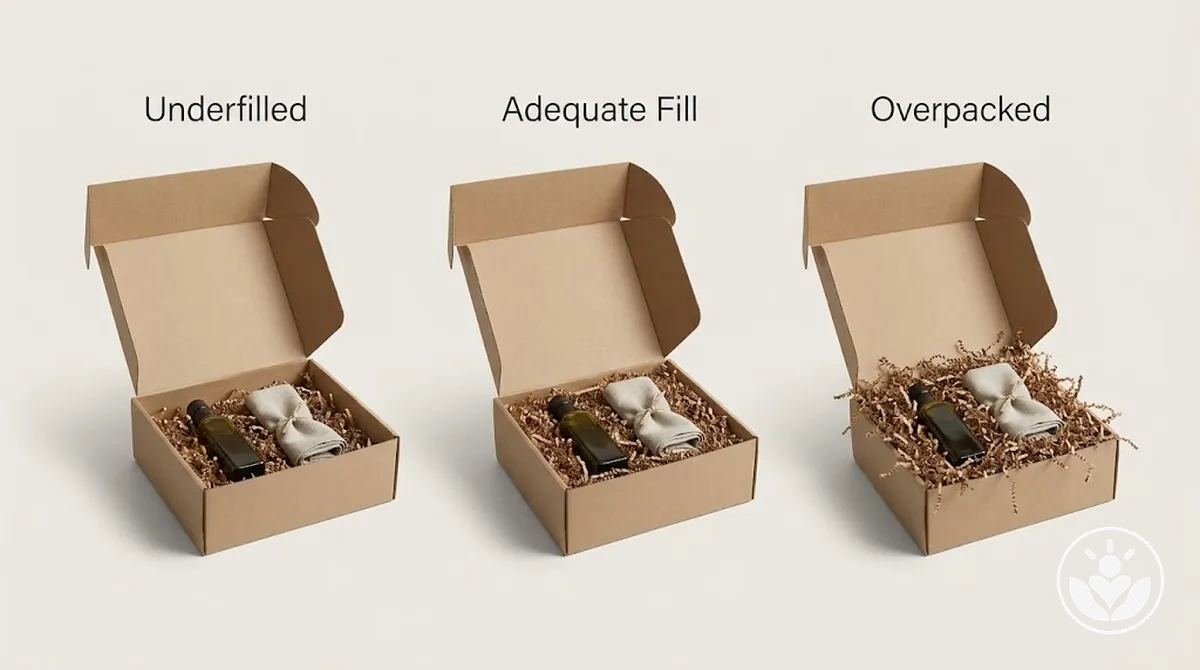
If unwanted void remains after checking the quantity, guidance on how to fill empty space covers that separate troubleshooting task.
Lower-waste gift box filler options can reduce material use or improve reuse, recycling, or composting pathways while still meeting the required protective or decorative function.
The practical outcome depends on material quantity, contamination, local disposal options, reusability, and protective performance rather than one environmental label.
Decision order for lower-waste filler